Home Blog Page 58

Tips on How to Save Money When Moving House

0
How to Save Money When Moving House

Moving house often comes with many positives, but it can also dig quite a big hole in your wallet. The cost of moving from hiring a professional mover to purchasing packing supplies can soon add up. 

Luckily, with a few simple strategies, you can keep your costs low and stay within your budget. While it might take some extra preparation, the results will be worth it in the end.

Interested in learning more? Let’s take a look at five ways on how to save money when moving house. 

Ask Friends and Family for Assistance

Ask Friends and Family for Assistance

Moving house is a big job, so don’t be afraid to ask friends and family members for help on the day of the move. Not only will this help lighten the load, but it will reduce your overall costs if they offer their services free of charge!

They may even offer for you to stay with them until your new home is ready. If you don’t have nearby family or friends, check out these short term rentals Mississauga.

Shop Around for Quotes

When you’re looking for a moving company, make sure that you shop around for quotes from different companies. This will allow you to compare prices and find the best deal for your budget. 

Remember to ask about any additional fees or charges that may not be included in your quote so you can make an informed decision about which company is right for you. The last thing you want is to fork out more than you expected.

Sell or Donate Unwanted Items

Sell or Donate Unwanted Items

One great way to save money when moving is by getting rid of any unwanted items. You can either sell them online or donate them to charity; either way, this will help reduce the amount of stuff you have to relocate. 

Another benefit is that it can make you some cash in the process! The extra money can be put towards covering other expenses. 

Reuse Boxes and Packing Supplies

Buying new boxes and packing supplies can be expensive. If possible, try to reuse materials that are already available at home, like suitcases and bags, as well as old newspapers and bubble wrap for padding fragile items. 

If you need to buy new materials, check out local supermarkets and shops that often give away used boxes free of charge! You can find more great packing tips here.

Reuse Boxes and Packing Supplies

Reuse Boxes and Packing Supplies

While professional movers can be helpful if you need assistance with heavy lifting or require storage space, don’t feel pressured into hiring one if it isn’t necessary!

Assess your options, and consider whether or not you need their services. Most people can handle it themselves, either by asking for help or by hiring a van. If you do choose to go down this route, remember to factor in the cost of petrol and insurance.

Pack Strategically 

When packing, try to group items together that can be moved in the same box. For example, books can be grouped together and then packed in boxes. This will help reduce the number of boxes you need and save you time and money in the long run.

Label Everything

Label Everything

Labelling your boxes is an essential part of the moving process. Not only will it make it easier to locate items when you arrive at your new home, but it can also help to reduce the amount of time it takes to unload.

Take Advantage of Special Offers

Some moving companies offer special deals or discounts for people who book in advance. Do your research and see you can take advantage of any special offers. 

You can also keep an eye out for promotional codes that you can use when booking your move. This can help you save money and make your move even more efficient

Do the Cleaning Yourself

Do the Cleaning Yourself

Hiring a professional cleaner can be expensive, so if you have the time, consider doing the cleaning yourself. This will save you money, and you can tackle the task room by room. 

Start by vacuuming and dusting, then move on to more detailed cleaning, like wiping down surfaces and cleaning the windows.

Take Your Time

Finally, take your time when packing and avoid rushing the process. This will help you be more organized, which can help reduce the stress involved in the move and help you save money. 

Try to stay focused and complete one task at a time. This will help you stay on top of the packing and ensure you don’t forget anything.

Final Words  

That’s it! As you can see, moving house doesn’t have to cost an arm and a leg. With these five tips, you should be able to keep your costs low while still ensuring that everything goes smoothly on the big day! 

Read more:

What is a Traditional Style House? History, Example, Features

0
Traditional Style Houses

One of the first considerations you’ll make when buying or building a traditional style house is what style you want your home to be. 

Traditional style house ideas consider the styles that were prominent in a certain region or location. The distinction between classic and modern homes is more than meets the eye. Today constructing these houses is about commitment to retaining a relationship to previous architectural styles. Creating a sense of continuity and connection to the past, helps occupants maintain a historic look and feel.
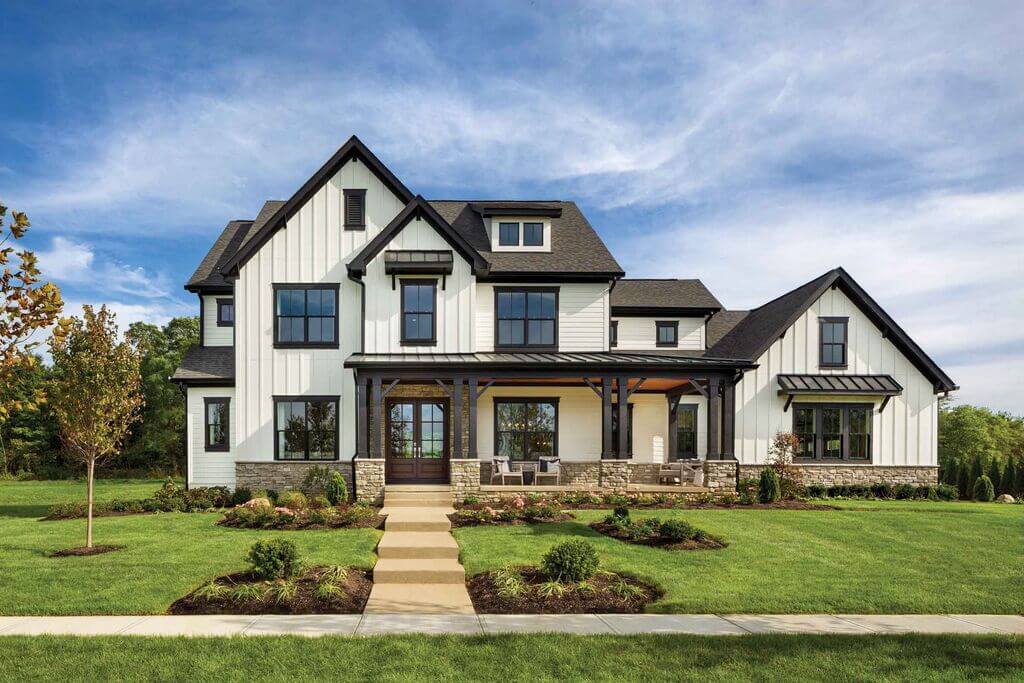
Traditional house characteristics appeal to people of various ages and lifestyles, from young singles to growing families, and retirees. The reuse of resources, and the design of homes and buildings to be congruent with the overall building design of the area.

What is a Traditional Style House? 

Traditional Style House

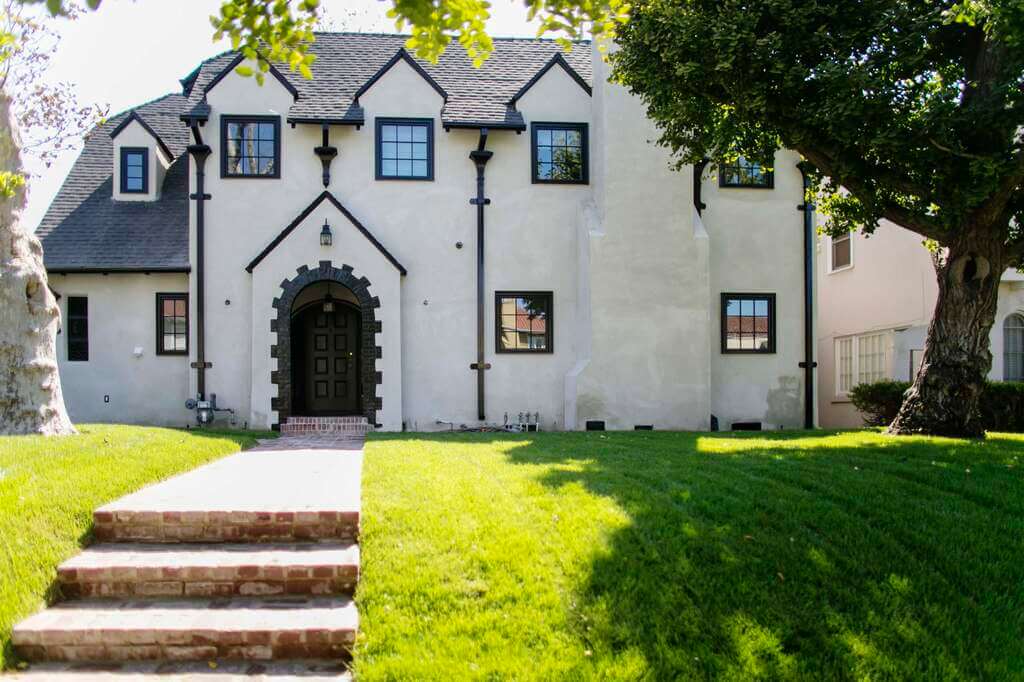
The term “Traditional style house” refers to a variety of home-building styles, each with its particular features. Homes in the traditional design combine functionality and accessibility with a timeless appearance. They were from the 19th and early 20th centuries and founded mostly in city centers and long-established neighborhoods.

Traditional style house ideas are majorly influenced by historic architectural styles such as Victorian, Gothic, Colonial, Neoclassical, or Craftsman architecture. However, many new traditional house styles made to look like older ones.
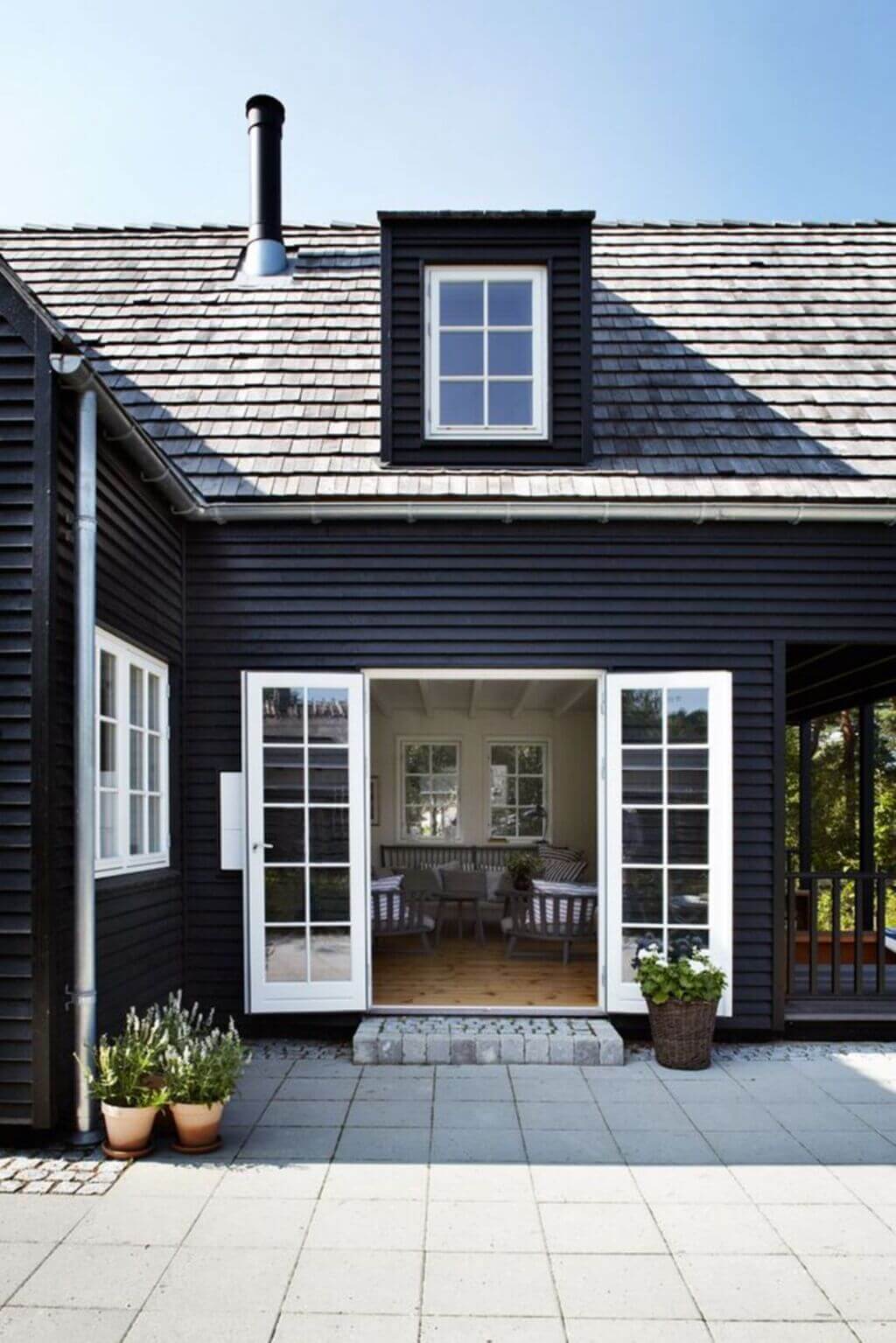
Bricks, natural wood, plaster, stucco, and stone masonry are among the traditional building materials utilized. Modern architecture, on the other hand, rejects classical embellishments in favor of a minimalist, simple, clean appearance. 

One defining quality of multiple traditional house plans is their functionality, another distinctive feature is their basic style. Most of the time, the exterior of this house will be plain. The cost of a traditional style homes influenced by the materials used, with natural elements like wood being more than manufactured items like plastic or metal.

Features of a Traditional Style House 

Features of a Traditional Style House 
  1. Ornamented Floors: Intricate mosaic designs are frequently used in hallways of a traditional style house. Stone flagged floors are typical in the kitchen, whereas parquet flooring is common in the living and dining rooms. Furthermore, rugs with elaborate patterns are used in spaces like the living room and dining room. In these house styles, depending on the space, the type of flooring can vary

  2. Darker Colors: Accent colors in traditional style houses include red, brown, green, and warm jewel tones. While the walls in traditional style homes are painted in a neutral tone to allow the room’s vibrant furniture, artwork, and accent pieces to stand out. The combination of these bright accent colors with neutral walls produces a welcoming and regal setting.
  3. Large windows and doors: Traditional house exteriors frequently employ large, double windows with timber frames and wooden doors.
  4. Material Palette: Wood is one of the most commonly utilized materials in the traditional house style. To further accentuate this uniformity the furniture, wall decorations, and other adornments are also made of it.

History of Traditional Style Homes 

History of Traditional Style Homes 

In New London, the oldest known traditional style house constructed in 1640. This house was named after the colonial government officials who used it to oversee the colony’s affairs until a permanent edifice built.
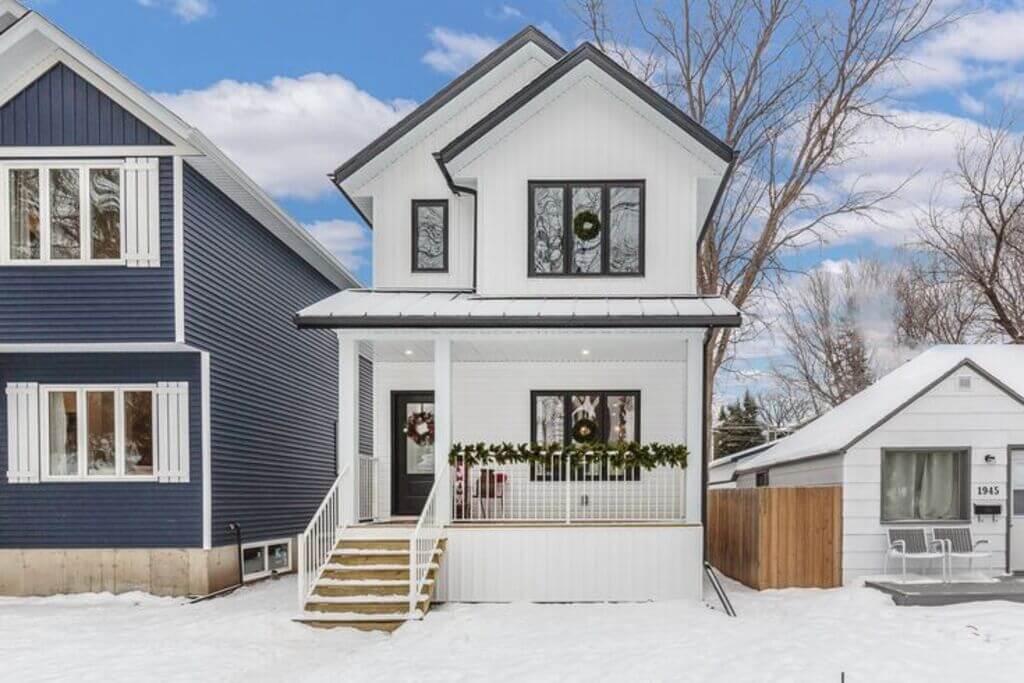
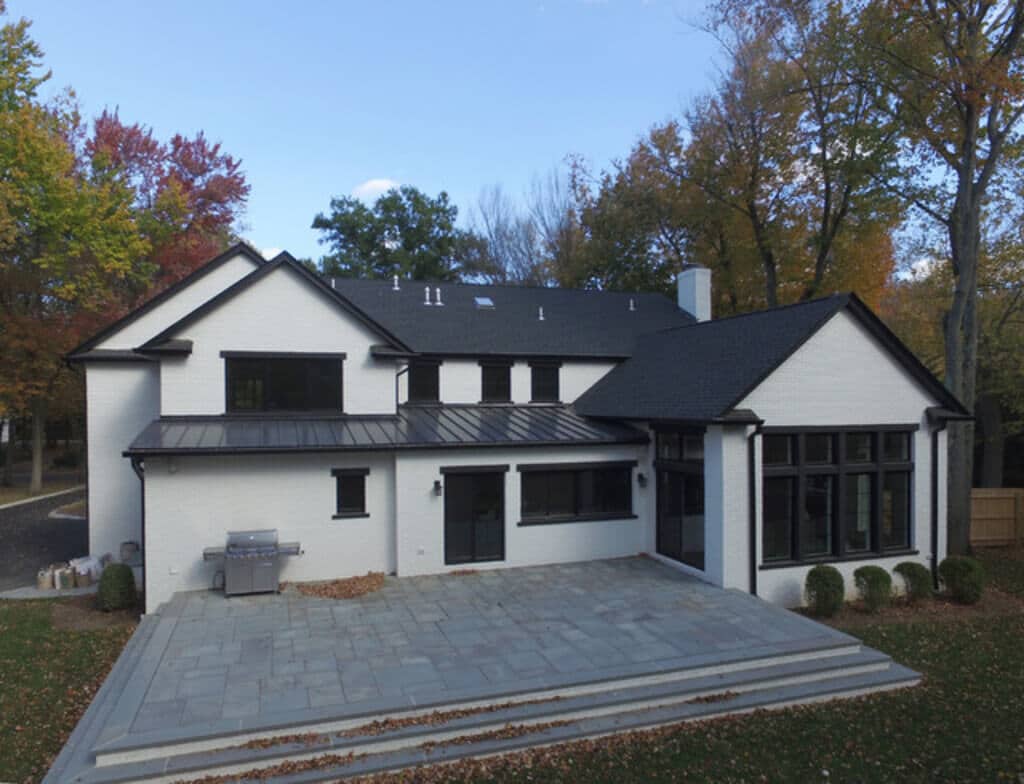
Later during the early 1700s and 1800s, traditional-style houses were more than popular in American and European homes. The architectural styles of these traditional houses are most closely connected with Neoclassical and Georgian architecture, but there’s a considerable connection with Colonial architecture as well.

One can see the blend and overlapping of many characteristics from different eras. From detailed woodwork, dark furnishings, deep-colored drapes, large windows and doors, ornate cornices, gold-framed wall decorations, and other exquisite elements are common.

Following World War I, the government attempted to improve housing in 1917. This also influenced the style of traditional houses. The designs were furthermore influenced by the Arts and Crafts movement, and despite their lack of ornamentation, their form and surroundings intended to imitate rustic cottages.

Examples of Traditional Style Houses

1. Ben Pentreath’s Country House

Ben Pentreath’s Country House

This traditional style house built in 1820, the house is a perfect example of a transitional style house, with large windows, wooden frames, and shutters, as well as extraordinarily symmetrical proportions. Original architectural features such as the window in the hallway, stone flooring, open fireplaces, beams, and sash windows preserved to give justice to the house. 

The importance of the church in Georgian England pervades the interior, especially in the dining and sitting rooms. White neutrals, sympathetic wallpapers, complimentary throws, and refurbished areas added to the mix. Although the house built after Jane Austen died, it has a sense of era and arrangement that would have made her feel at ease.

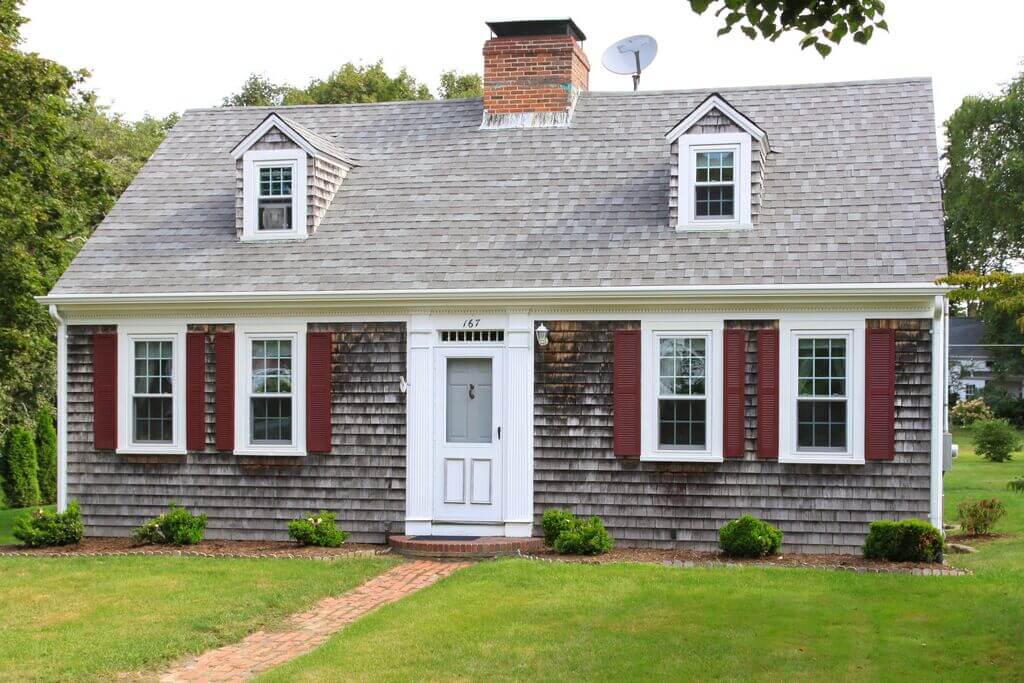
2. Cape Cod Style Traditional House Design

Cape Cod Style Traditional House Design

The Cape Cod-style of architecture introduced to America in the 1600s. In the mid-1800s, Cape Cod-style traditional homes were popular throughout New England because they were simpler to heat and strong enough to withstand the climate extremities. These modest traditional-style houses constructed like half-timbered thatched English cottages from the 17th century. Although an original Cape Cod traditional house was one-story, second stories added when needed for practical reasons.

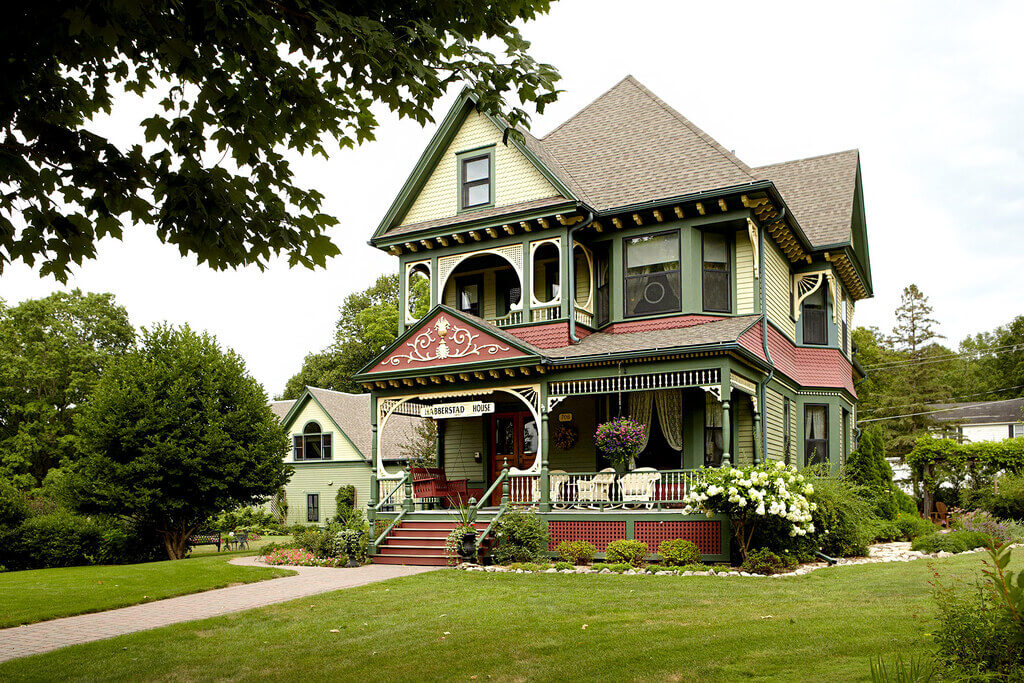
3. Victorian Style Traditional House

Victorian Style Traditional House

A Victorian traditional style house identified as any structure built during Queen Victoria’s reign in the nineteenth century. These range from magnificent country style houses and estates outside of cities. To basic and affordable row houses constructed afficiently in cities for all sorts of people. These traditional style house plans include gabled roofs, stained window glass, intricate woodwork, dark colors, round soft angles, towers, turrets, and dormers.

4. Neo-Classical Traditional House

Neo-Classical Traditional House

The birth of Greek and Roman architecture, which began around 1750 and flourished in the 18th and 19th centuries gave rise to Neoclassical traditional architecture. In the early to mid-twentieth century, the neoclassical design tendency gave way to modernism. Neoclassical traditional house plans promote a sense of grandeur.

The symmetrical façades and balanced arrays of windows are examples of traditional proportions. The core part of these traditional-style houses is usually two stories tall, with one-story wings on either side. A two-story portico with towering columns can either frame the entrance or span the full façade.

Traditional Style Homes Signify Timeless

Traditional Style Homes Signify Timeless
traditional house
Style of traditional house style
traditional house style
traditional house
traditional house exterior

Despite the widespread notion that traditional style house plans are uninteresting or inefficient, most traditional homes include classic works of art and exciting stories to tell.

Traditional style houses are significant because they preserve our historical connection. This attachment to the past keeps us drawn to historic structures and styles that adapted into other many parts of the house.

Traditional house styles and elements used in construction give people a sense of tranquillity and continuity throughout without deviating too far from their traditions and heritage. Whatever size or features a conventional home design has, one thing is certain: they provide a pleasant and functional living for today’s hectic lifestyles.

FAQs 

1. What Are the Common Features of a Traditional Style House?

The Common features of traditional style house dwellings share some characteristics, despite their differences in origin. For Example, Large, open porches with overhanging beams and rafters, dormers, and a tall, pointed roof. Traditional construction materials include natural brick, wood, plaster, stucco, and stone. Every traditional house design that still survives today is significant, regardless of its size, type, or status because of its handcrafted remarkable craftsmanship.
You will notice simple natural forms used in traditional structures. The doors are often constructed of wood, and the walls are typically unplastered. The ceilings are sometimes made of wood with decorative patterns. 

2. What Is the Definition of Traditional Decorating?

Traditional style house décor characterized by uniform, calm, order, and dependability. There is nothing weird or disorganized in a classic era. Although for some people the decor style may appear to be out of date. The walls are basic, with no distracting embellishments. To create a relaxing ambiance, color utilized sparingly, while the art pieces are highly decorative. 

3. Why Do People Love Traditional Houses?

Traditional style homes have a lot of dark colors and warmth in their interiors. These architectural elements give depth and interest to the interior of the home and make a statement of luxury that is equally as powerful to the occupants. It’s without a doubt a unique manner of designing a house with recognized symbols from a certain culture of distinct people. As a result, traditional houses’ unique character, location, and history have led many people to fall in love. Even with small alterations, a traditional style house can pay off in terms of design satisfaction and resale value.

Discover More:

Fab Fifteen Ideas for White House Black Trim

0
White House Black Trim

Architectural details make a statement for home and highlighting them with different shades can make a house look even more gorgeous. The black and white combination is the classic one whether it’s in fashion, art, or architecture. A palette with white house black trim offers endless choices for your home with numerous possibilities. A white house with black trim is considered to be an American classic style.

Nowadays, homeowners don’t go for a single black or white shade, instead, what excites them more is various combinations of black and white to create a warm, welcoming, and stylish combination.

The Black and white duo goes for any decor whether it’s in the interiors or exteriors of the house. This trend has been there forever, and the timeless appearance through the combo will sustain the popularity in the coming times as well.

White House With Black Trim: 15 Inspiring Ideas

White House With Black Trim: 15 Inspiring Ideas

White house black trim duo is something worth incorporating if you’re planning on remodelling your house or building a new one. It can enhance the visual appeal and add boldness to the facade.

Here are 15 white house black trim ideas to create a classic visual of your home’s exterior.
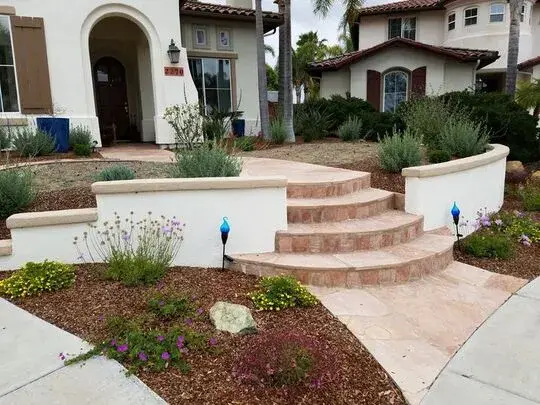
1. White Brick House with Black Trim

White Brick House with Black Trim

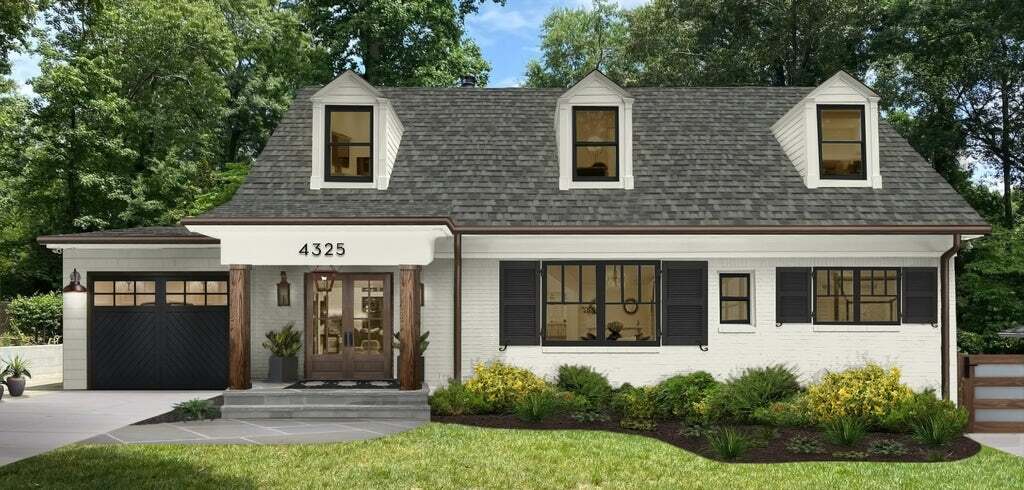
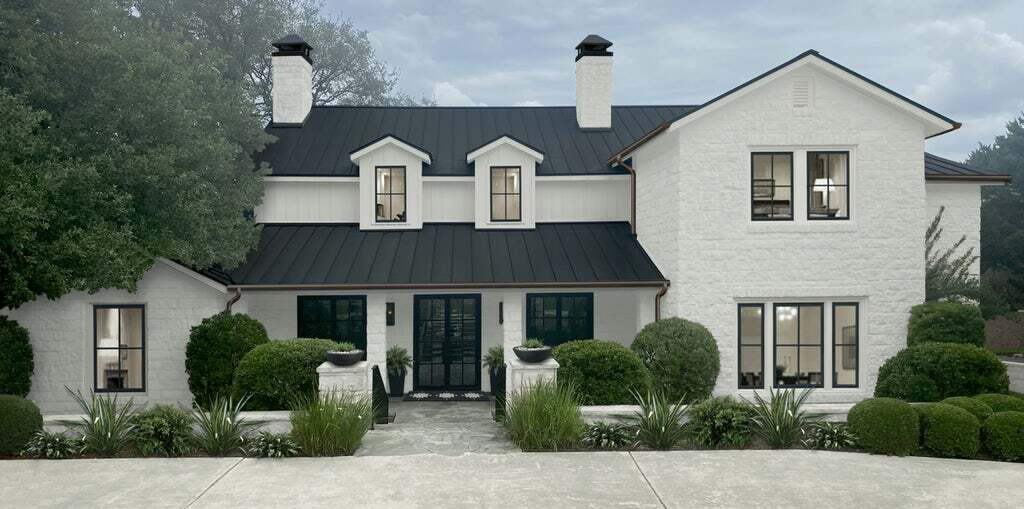
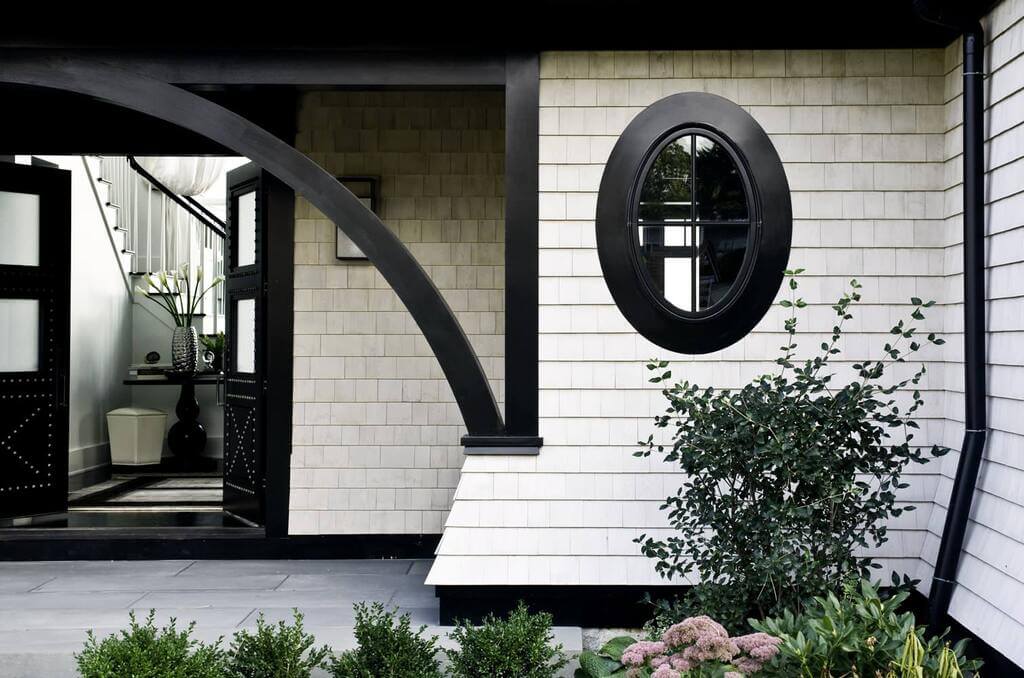
One of the easiest ways to modernize a house is by painting the bricks on the exterior. The plain white facade can further be enhanced by applying a smooth combination with black trim. Black window frames, columns, and eaves can add boldness to the design.

The aesthetics can be more enhanced with a wooden front door which will add another colour to the material and colour palette of the house. With soothing white on the majority of the area, the darkness of black stands out and creates a stylish facade.

2. Front Door in Black

Front Door in Black

A pop of black is more than enough to make a statement. In a simple white home, this can be done by just painting the front door black.

The dark main door complements the surrounding neutral-toned walls and adds to the beauty of the structure. 

3. Black and White Contrast

Black and White Contrast

To make a plain white elevation stand out, it can be contrasted with black colour. The black shade on the windows can provide a strong contrast and add life to the otherwise bland facade.

The combination of black and white merges well with the natural scenery and provides a sense of belonging to the whole structure.

4. Black Garage Door

Black Garage Door

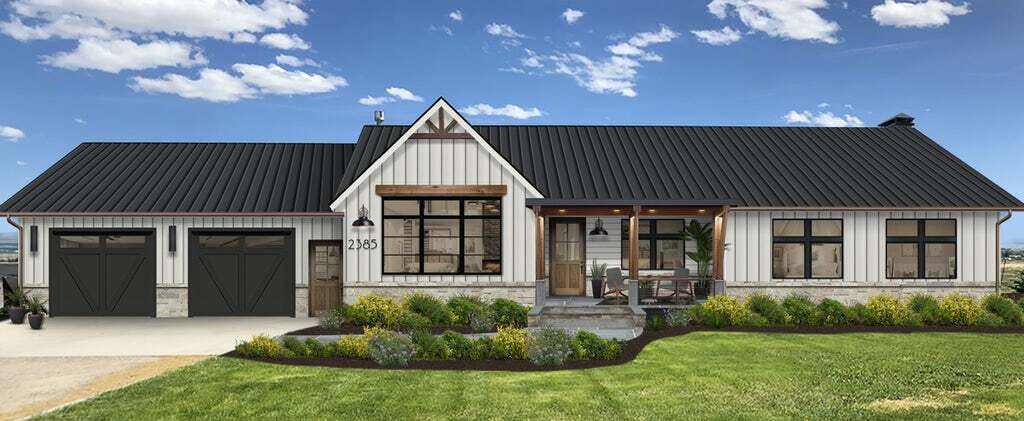
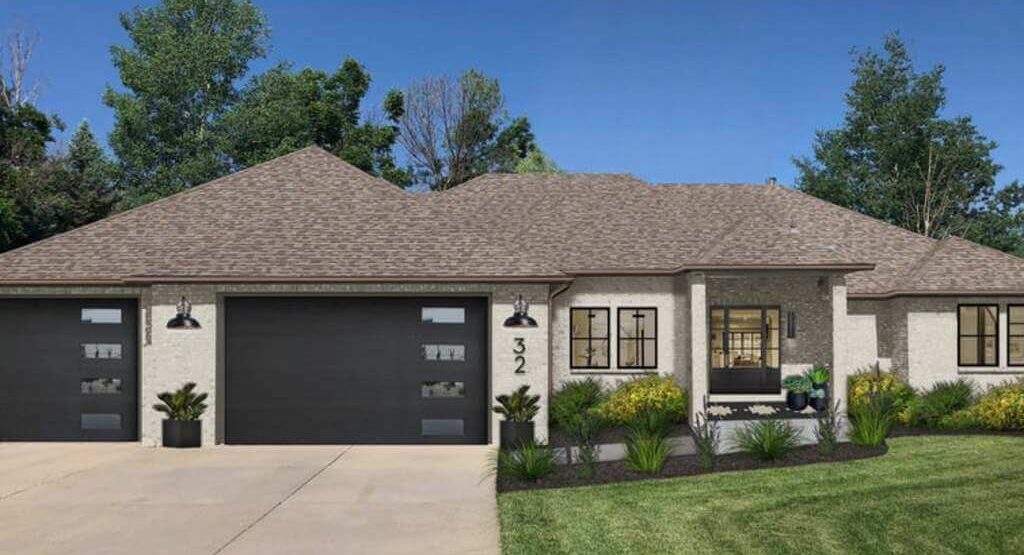
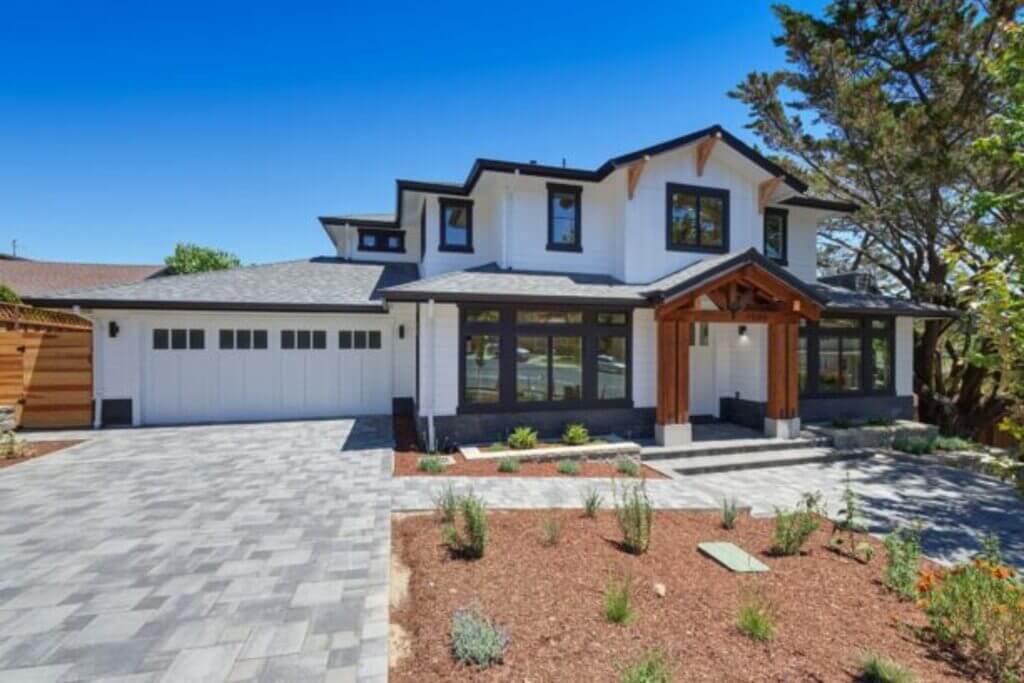
A classic white house is the most popular style for the facades. With white bricks, trims, eaves, and siding, these homes have been in the trend for a long time.

In order to add vibrance to the white structure, windows and garage doors can be painted with bold black. Set in a crisp landscape, this white house black trim house can stand out with brown wooden beams and greenery surrounding the building. This small step can make the simple elevation look complex and interesting.

5. White House Black Trim on Stone House

White House Black Trim on Stone House

A white stone house can be combined with black trim to create a unique look. The light coating on stone can be highlighted with a black accent on windows and the metal roof.

A light stone house totally contrasted with a black roof and black trim is an absolute favorite in terms of its style and extraordinary accent.

6. Off-white with Charcoal

Off-white with Charcoal

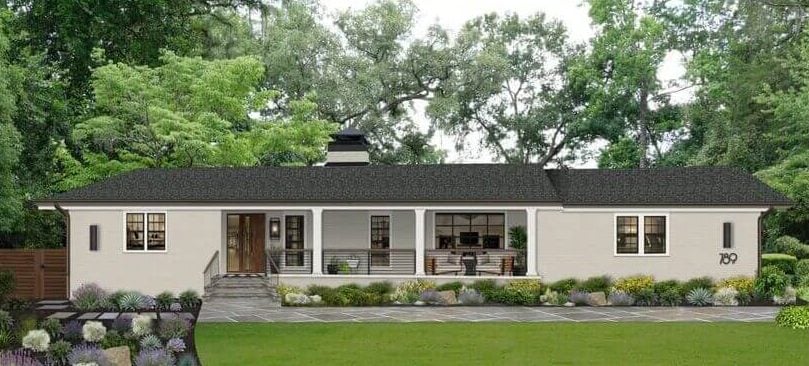
A fresh coating of paint can bring back life to a house. For a white house, a contrasting charcoal shade can add an extra punch to the appearance. 

The off-white brick house can appear more intriguing with charcoal trims as it adds depth to the appearance.

The timelessness and elegance of this combination can modernize an otherwise traditional house. It can further be enhanced by adding a modern steel door for the garage.

7. Monochromatic Magic

Monochromatic Magic

A monochromatic colour palette has its own magical effect on the aesthetics of a building. This palette can be chosen for the house and trims can be enhanced with black shade for the windows.

Highlighting the trims can impart a strong and crisp look to the white house. Painting trim in the same colour as siding is a common technique to deviate from the conventional white house black trim contrast. 

8. White House with Black Gutter

White House with Black Gutter

Did you know the role gutters play in the exterior design of your house?

The idea of white house black trim can be applied by painting the gutters in the same shade of black for significant benefits.

It is a great idea to avoid the house looking plain and too simple. Black gutters provide an additional accent to the elevation of the house along with black trims. It is a great way to make the home elevation look dazzling and engaging.

9. White Shingles and Black Trim

White Shingles and Black Trim

Another dazzling combination is with white shingles contrasted with black trim. Ivory color with a yellow undertone gives a warm appearance to the house. The black latex paint on the trims adds boldness that can be increased with the width of the trim. 

The black color can also be used to highlight various other architectural elements in the facade like the main door, beams, gutter, and windows.

10. Wide Black Trim

Wide Black Trim

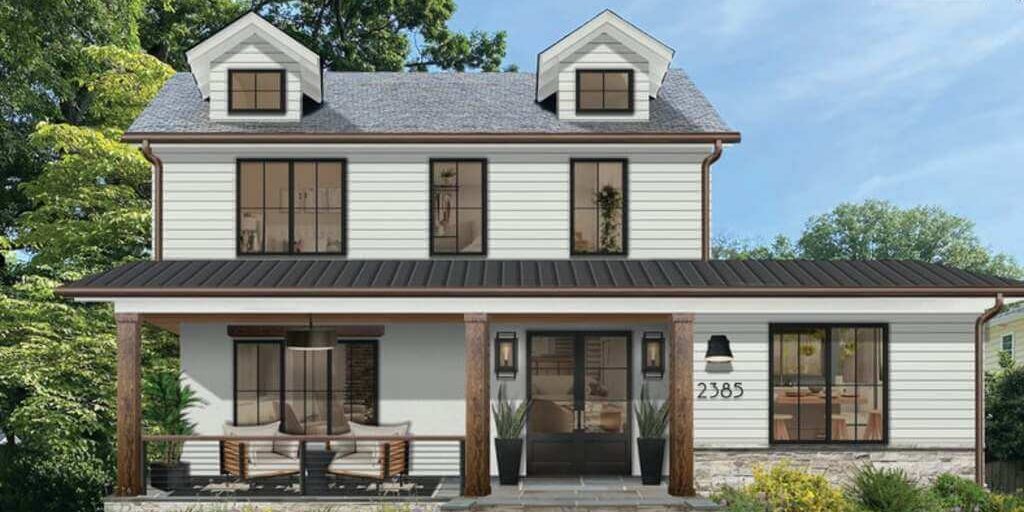
A plain white home can be conceived as a simple style due to the neutral tone used in the major dominating part of the house. However, even with plain white walls, a touch of boldness can be added with the use of black trims.

Black oversized trims for the elevation can add an interesting appeal. It can make the simple windows look unique and extraordinary just by adding a touch of black to the trims.

11. White House Black Trim with Brown Roof

White House Black Trim with Brown Roof

A white house black trim combination doesn’t only go well with a black roof, instead, a tint of brown can be taken into consideration for a more enhanced view.

The colour of the highest exterior element can be contrasted with the white hue. The visual impact resulting from the addition of a brown roof for the white house makes the house look unique and cosy from the exterior.

Upon pairing with black trim, the brown shade of the roof imparts a relaxing appearance to the house. To complement this combination more, a warm white shade can be selected.

12. Black House with White Trim

Black House with White Trim

A smart combination of black and white can transform a bland structure into a lively one. A black house with white trim is a perfect contrast that can further be enhanced with white and green landscaping.

Black house with white trim is a stunning pair that feels classic and fresh at the same time. The modern black houses stand out and make a statement with their color accents.

13. White and Black with Bright Red Door

White and Black with Bright Red Door

As black and white can be paired with any other color, a bright red shade adds liveliness to the design. Bright shades form an interesting visual focal point and using a bright red door in a white house black trim design is a compatible choice.

The bright red door adds a sense of stunningness and daring feeling to the whole structure. It makes the house look welcoming and safe. Highlighting black and white combo with such bright shade catches more attention and make the design stand out,

14. Rake Board Roof with Black Trim

Rake Board Roof with Black Trim

Rake Board is one of the exterior trims that can be incorporated in a white house design. It can be used to conceal the edges of a sloped roof.

The black trim as a rake board can impart a finishing touch to the roof and add aesthetic value as well. 

15. Black Roof for White House

 Black Roof for White House

For the vintage black and white design, it is the best idea to combine a white facade with black trims and a black roof.

The design with this palette adds consistency to the design apart from being easy to follow and apply. Although using black trims does the job of making a house look prominent, the addition of a black roof can make it look even better. It can enhance the prominence of the home in the entire neighbourhood. 

White House Black Trim with Wooden Accent

White House Black Trim with Wooden Accent

These white and black combinations are highly inspiring. If you’re looking for black window trims but your windows don’t need replacement, you can just paint black shade on the existing window trims to achieve the look. 

In case you’re looking for brand new black trim windows, the best option is to go for vinyl windows or black aluminum clad windows for added durability.

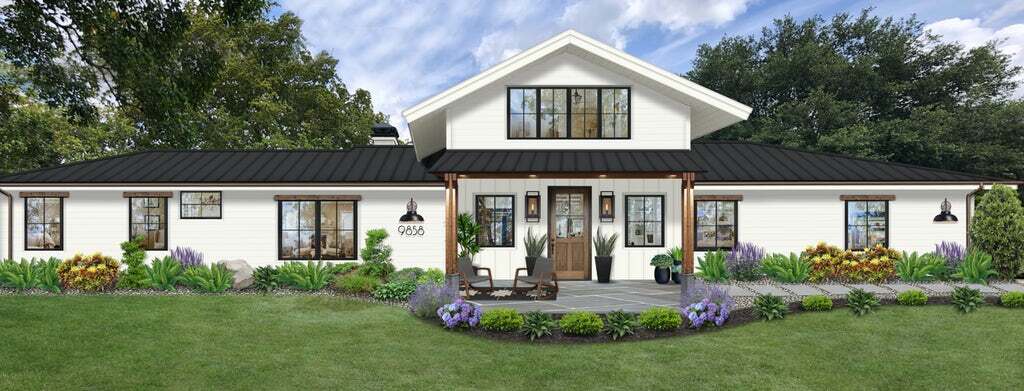
White has been the most popular choice for a home’s elevation. But with the emergence of the farmhouse trend, the white exteriors are highlighted and made more appealing with the use of black trims.

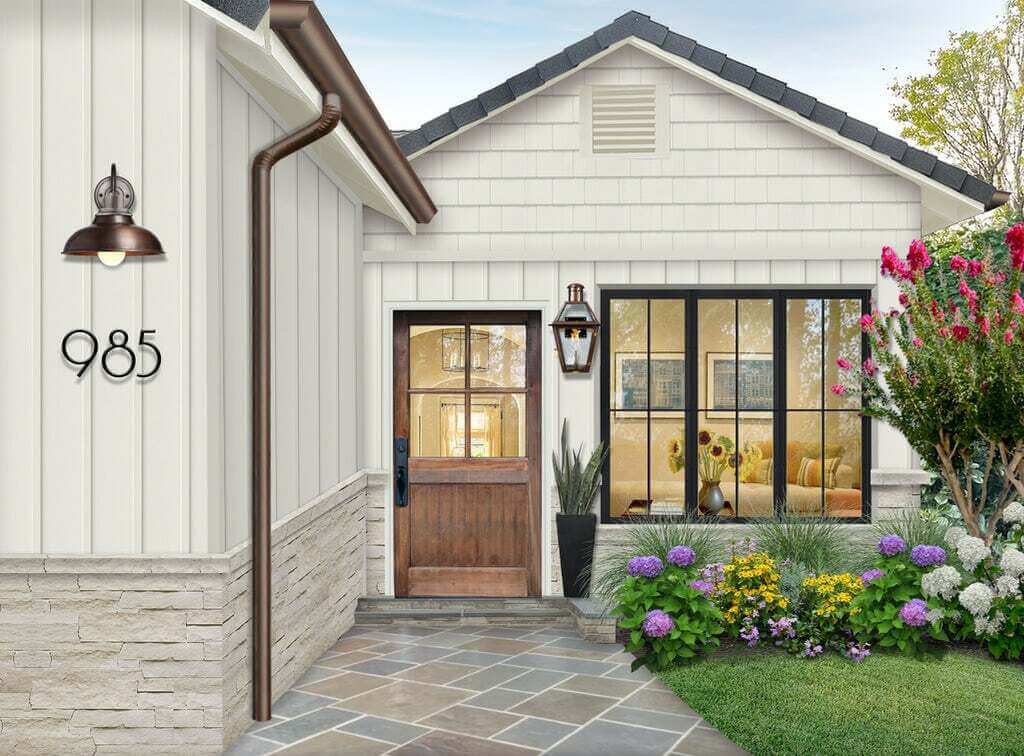
For a warm white house black trim house, adding accents of natural woods can come in handy. A wooden toned door with black trims on a white house makes an interesting combination that leads to a unique effect and hikes the aesthetic scale of the structure. 

Drama and Contrast

The front of a white house with a brown door

Windows with black trims are well capable of adding a drama contrasting to the white house. The white bricks, stones, shingles, etc. can be paired with black trims to achieve this look.

The white house black trim combination not only makes the white stand out, but a pop of black adds an interesting contrast to the structure. Architectural elements and their colour selection are important to compose a good elevation. 

The sea of options in the combinations and design of these elements provides homeowners with unlimited options to try and make the house look unique and special. The best part about a white house with black trim is that it is a classic, timeless design. The combination of two welcomes other shades to be added in the colour scheme to jazz up the design even more.

There are numerous ways and design ideas to incorporate a black trim in white house. Apart from these, there are many options for the exterior trim types to choose from. All you need to do is pick the right one that will suit your design and make the house look more appealing.
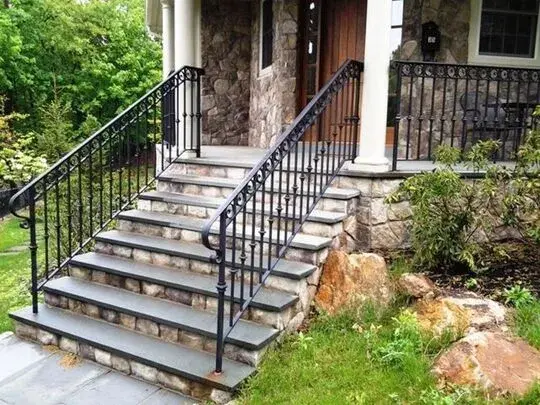
This trend of black trims has pushed the boundaries in-home designs and allowed people to experiment as per their personal choice. Whether it’s a traditional house or a modern style, this look with a black and white combination is easy to achieve and will ensure a highly aesthetic design for your home.

In case you missed it!

Top Ways to Decorate Your Indoor Plants

0
Ways to Decorate Your Indoor Plant

Indoor plants are quite an asset for any surrounding – whether it is a residential or commercial building. You end up getting a lot of benefits when you decorate your surroundings with indoor plants. These include:

  • Getting additional oxygen via photosynthesis
  • Reduction in your stress level
  • An enhancement of your productivity when you keep them on your office desk

Begin with something small, and with time, you can add a couple of indoor plants on your side tables. It is even possible for you to create your own garden room which has lots of plants in them.

In the forthcoming section of this write-up, we will divert our attention to the top ways to decorate your indoor plants.

Top Ways to Decorate Your Indoor Plants

Plants can add a fresh lease of life to your surroundings. They liven up the atmosphere wherever you keep them in your environment. A great tip that interior designers often give is to try different ways to decorate your indoor plants till you succeed. Here are some ideas that will help you going:
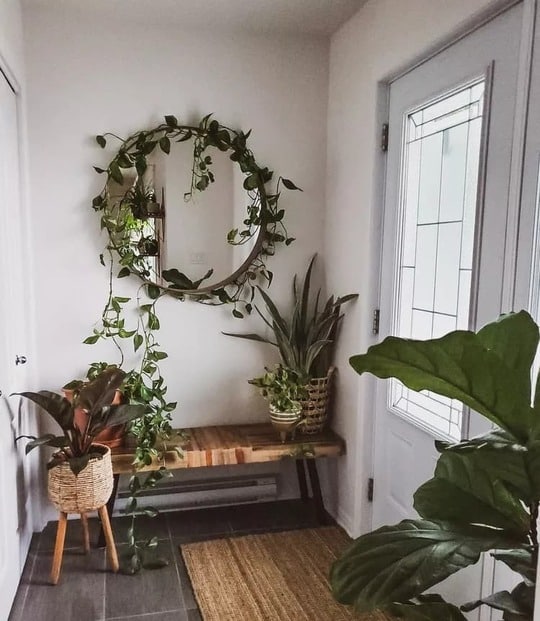
Wrap Your Vines Around a Mirror

Wrap Your Vines Around a Mirror

Wrapping your plant vines around a mirror can add beauty to your home. The greenery of the vines can create a natural and calming atmosphere in any room.

The addition of plant vines to a mirror can be a simple and affordable way to add a touch of natural beauty and warmth to your living space.

Give Your Empty Bar Cart a Much-Needed Makeover

Give Your Empty Bar Cart a Much-Needed Makeover

If you have an empty bar cart that is in need of a makeover, adding some plants can be an excellent solution. Plants can bring life and color to any space, and they are a great way to decorate and personalize your bar cart.

There are many types of plants that can thrive in a bar carts environment, such as small succulents, ferns, and herbs. You can also choose plants of varying heights and textures to add interest and depth to your display.
Adding plants to your bar cart can create a fresh and natural feel, making it a perfect addition to any home decor.

Add Fragrant Plants

Add Fragrant Plants

Many plants are grown for their fragrant scents. These plants not only add aesthetic value to your home decor but also provide a soothing aroma that can help reduce stress and promote relaxation. Here are some examples of plants that are grown for their scents:

  1. Roses: Roses are among the most popular plants grown for their fragrant scent. Different types of roses have different fragrances, ranging from sweet and floral to spicy and fruity.
  2. Lavender: Lavender is grown for its distinctive, relaxing scent, which is used in a wide range of products, including perfumes, soaps, and candles.
  3. Jasmine: Jasmine is a highly fragrant flowering plant that is grown for its delicate, floral scent. Jasmine is commonly used in perfumes and in traditional remedies for its calming effects.
  4. Bergamot: Bergamot is a citrus plant that is grown for its fragrant oil, which is used in perfumes and as a flavor for Earl Grey tea.
  5. Ylang-ylang: Ylang-ylang is a tropical plant that is grown for its highly fragrant flowers, which are used in perfumes and in traditional remedies for their calming effects.

Try growing one of these plants at home. Ferm Living plant boxes will serve as an excellent way to showcase your new darling.

Conclusion

Cultivating plants is the best thing possible for your house. First, they serve as a highly decorative item that you can diversify as you like. Most plants are, of course, green, but they come in a huge variety of sizes, types, and looks. That means you can choose a plant that fits your home and your everyday life. 

If you often forget to water your plants, you can get types that need less water – or that make it very obvious they lack water without it being too late to water them. You can also vary which plants you have in which room. For example, rooms with lots of light should get plants that need it, while darker rooms should have plants that need a darker environment. It may take a little effort, but getting plants that work with your home is worth it – if you are at a total loss, ask for professional advice. 

In the kitchen, it’s especially smart to include herbs, that way; the plants serve a dual purpose. They are decorative, and they can be used when cooking. This is also a perfect place for herbs if you have an outdoor space. 

When introducing plants to your home, do it the way that works best for you!

Explore More

Avoid These Common Bathroom Remodeling Mistakes in Austin

0
Bathroom Remodeling mistakes In Austin

After months of planning, you’re finally ready to start remodeling your bathroom in Austin. You have all the right materials, tools, and professionals at your disposal, so you feel confident you can get the job done without any hiccups. 

Unfortunately, many homeowners make common mistakes during a bathroom remodel that can cost them time and money. In this blog post, we’ll share some common bathroom remodeling mistakes you should avoid while remodeling your bathroom in Austin. 

From selecting the wrong fixtures to failing to plan for storage solutions, these mistakes are easy to make but can have costly consequences if not addressed before starting the project. Read on for tips on how to ensure your renovation goes off without a hitch!

Not Considering The Future

Future of Bathroom Remodeling Mistakes in Austin

If you’re thinking about remodeling your bathroom, there are a few common mistakes that you should avoid. One of the most common mistakes is not considering the future when planning the remodel.

It’s important to think about how your family might change in the future when planning a bathroom remodel. For example, if you’re planning on having children in the near future, you’ll want to make sure that the bathroom is big enough to accommodate a changing table or a bathtub. Alternatively, consider installing grab bars or a walk-in shower if you’re getting closer to retirement age.

By thinking about the future, you can avoid making common mistakes that will end up costing you more money down the line.

Not Being Realistic About The Budget

Not Being Realistic About The Budget for Bathroom Remodeling

If you’re planning a bathroom remodel in the city of Austin, it’s important to avoid making common mistakes that can end up costing you more money in the long run. One mistake to avoid is not being realistic about your budget.

Many homeowners underestimate the cost of a bathroom remodel, thinking they can do it cheaply. However, bathroom remodels can be quite costly, depending on the extent of the work involved. If you’re not realistic about your budget, you could end up overspending and putting yourself in financial trouble.

It’s important to get accurate estimates from contractors before starting your project. Once you have a good idea of how much the work will cost, you can make a realistic budget and stick to it. This will help ensure your bathroom remodels stay on track and don’t break the bank.

Not Taking Into Account The Bathroom’s Usage

Not Taking Into Account The Bathroom's Usage Bathroom Remodeling Mistakes

If you’re planning a bathroom remodel, be sure to avoid making common mistakes that can end up costing you time and money. One mistake to avoid is not taking into account the bathroom’s usage. 

For example, if you have a small bathroom, you’ll want to avoid putting in a large Jacuzzi tub that takes up a lot of space. Instead, opt for a smaller tub or shower. Another common mistake is not considering the needs of everyone who uses the bathroom. 

Finally, if you have young children, be sure to include features that make it safe and accessible for them, such as grab bars in the shower and nonslip flooring.

Overlooking The Details

Overlooking The Details of Bathroom Remodeling Mistakes in Austin

When you are renovating your bathroom, it is important to pay attention to the details. Some common mistakes that people make when remodeling their bathroom include:

  • Not planning ahead: Not having a plan or budget in place before starting your remodel can lead to overspending.
  • Ignoring the layout: The layout of your bathroom is important for both function and aesthetics. Make sure to take this into consideration when planning your renovation.
  • Choosing cheap materials: In an effort to save money, some people choose to use cheap materials for their bathroom renovation. However, this can often result in a lower-quality finish and may even lead to problems down the line.

By avoiding these common mistakes, you can ensure that your bathroom renovation will go smoothly and turn out just the way you envisioned it!

Hiring The Wrong Contractor

Hiring The Wrong Contractor for Bathroom Remodeling

For those staying in Austin city, hiring the wrong contractor is one of the most common mistakes people make when remodeling bathrooms in Austin. However, there are a few things to keep in mind when hiring a contractor to avoid this mistake. 

  • First, make sure you get multiple bids from different contractors. 
  • Second, check references and reviews before hiring anyone. This will help you avoid hiring someone who does not have a good reputation.

Do-It-Yourself Projects Gone Wrong

Bathroom Remodeling Do-It-Yourself Projects Gone Wrong

It’s no secret that many homeowners attempt do-it-yourself (DIY) projects in an effort to save money on home repairs or renovations. However, not all DIY projects are successful. In fact, some end up being costly mistakes.

If you are a resident of the city of Austin planning a bathroom remodeling in Austin, TX, be sure to avoid these common mistakes:

  • Not Planning for the Future: Many homeowners make the mistake of not planning for the future when remodeling their bathrooms. They choose finishes and fixtures that they think will be trendy now but may not be in style a few years down the road. When planning your bathroom remodel, think about what you want it to look like in 5 or 10 years. 
  • Skimping on Quality: Another common mistake is skimping on quality to save money. With a bathroom remodel, it’s important to use high-quality materials that will withstand daily use and last for years. Don’t cut corners by using cheap materials just to save a few bucks – it will end up costing you more in the long run when you have to replace things prematurely.

Conclusion

Remodeling your bathroom in Austin is a great way to give it a fresh look and update its functionality. However, if you don’t plan properly or take into account all of the possible problems that can arise, it can quickly become an expensive hassle. 

Avoid these common bathroom remodeling mistakes in Austin to ensure your renovation goes smoothly and stays within budget. Then, with careful planning and consideration for potential issues such as plumbing, electrical wiring, and proper ventilation, you can enjoy a successful remodel with minimal stress!

Explore Further:

How to Prevent Ice Dams: Easy Tips and Tricks

0
How to Prevent Ice Dams

Ice dams are a common problem for homeowners in colder climates. They can cause severe damage if not taken care of right away, so it’s essential to be aware of how to prevent ice dams before they happen.

Check Your Gutters

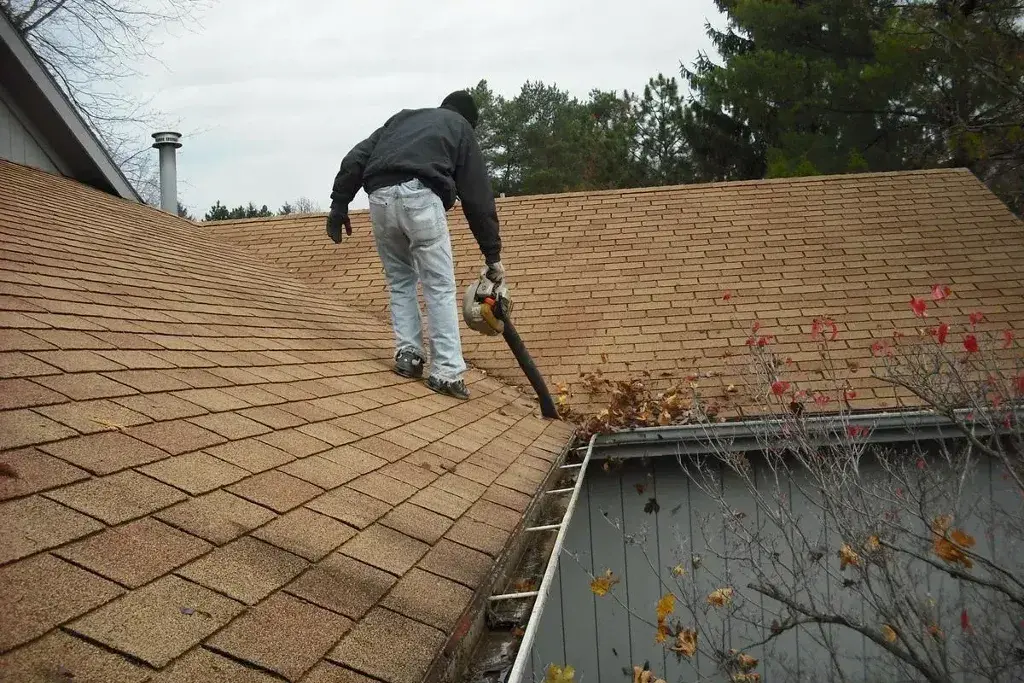
A man is working on the roof of a house

If you have an ice dam on your roof, there are several things you can do to prevent it from happening again. First and foremost, maintaining your home’s gutters throughout winter is essential. Remove any snow or ice that may have accumulated and ensure they’re free from debris so water can drain freely.

Ensure all gutters are appropriately sized for the amount of precipitation that flows through them; if necessary, adjust their size before winter sets in so they’re ready for use when cold weather arrives. You should also keep an eye out for leaks around windows or doors where ice dams tend to form–these leaks could be contributing to problems with drainage inside and outside the house!

Hard Freezes

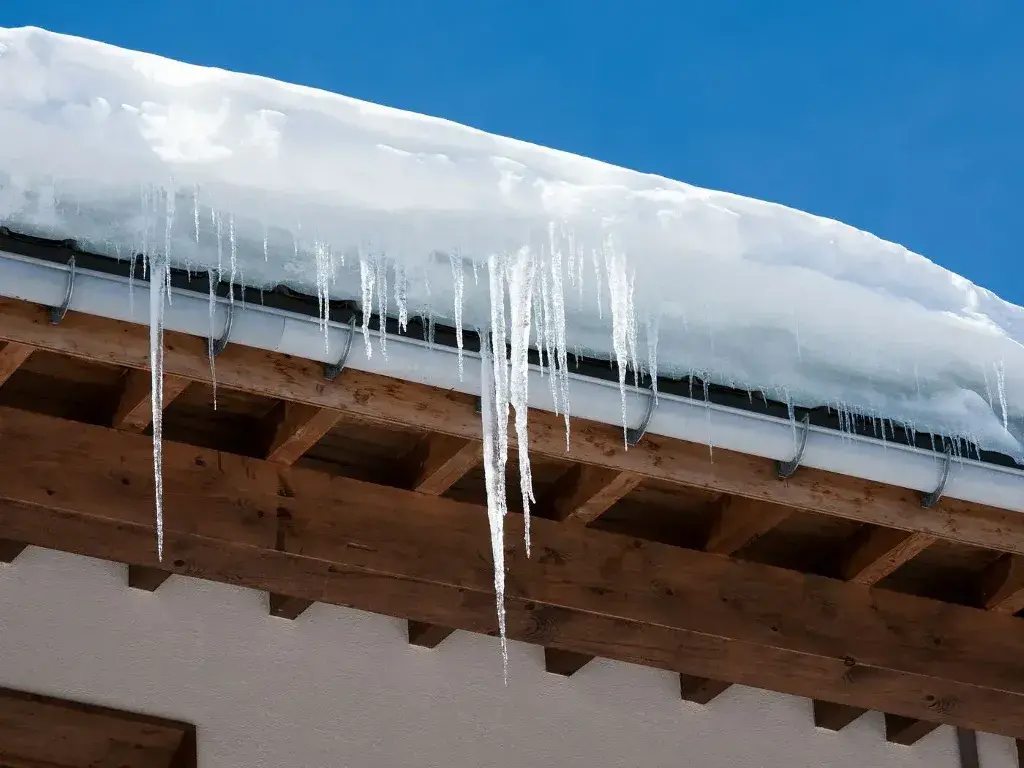
Icicles are hanging from the roof of a house

If you have a hard freeze, clean the shingles around your attic vents so there is no chance of ice dams forming. Snow and ice can block gutters and venting areas and prevent heat from escaping, leading to ice dams. If you have trees close to your home, consider trimming back their branches or removing them if necessary.

Insulating Your Attic

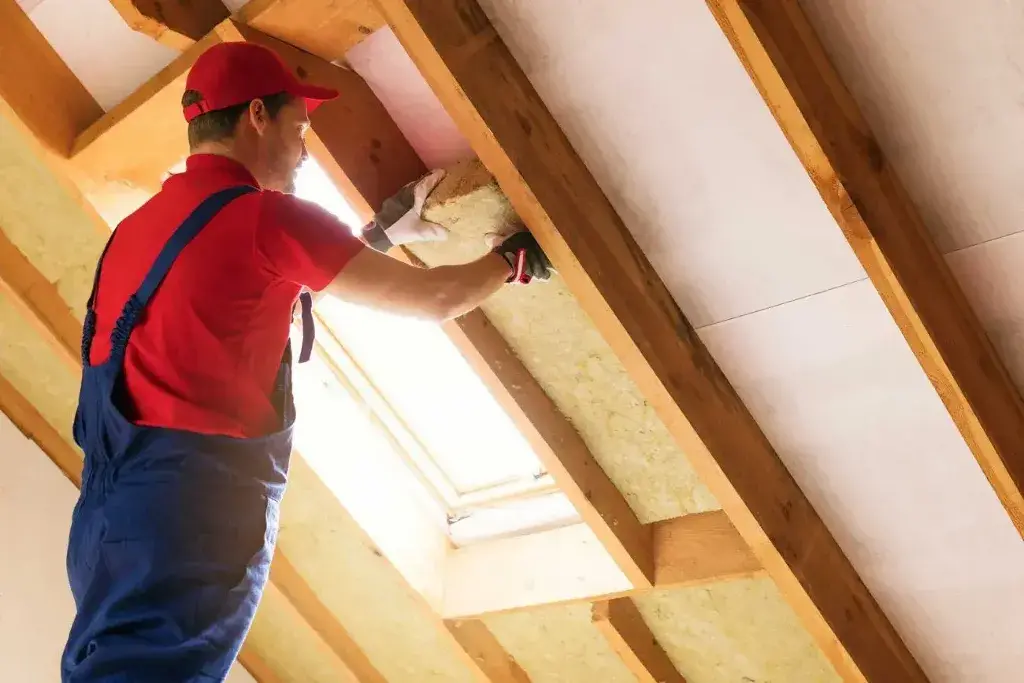
A man in a red shirt and blue overalls working on a ceiling

Adding insulation to your attic is a good idea, as it can help reduce heat loss through the roof. This can help prevent snow buildup and subsequent ice dam formation.

Insulating walls will also help keep cool air during hot summer months, which means less chance of condensation forming on them when temperatures drop again in wintertime (and thus fewer ice dams).

Consider adding insulation into walls or crawlspaces if not insulated; this will help keep warm air from escaping out of these areas into colder parts of your home where it could cause moisture problems with pipes or foundation walls. If you have an unfinished garage, adding adequate insulation will prevent heat from escaping into open spaces around doors and windows–a common problem for many homeowners who park cars there during winter months!

Install Heat Cables

A row of gutter hoses on the roof of a house

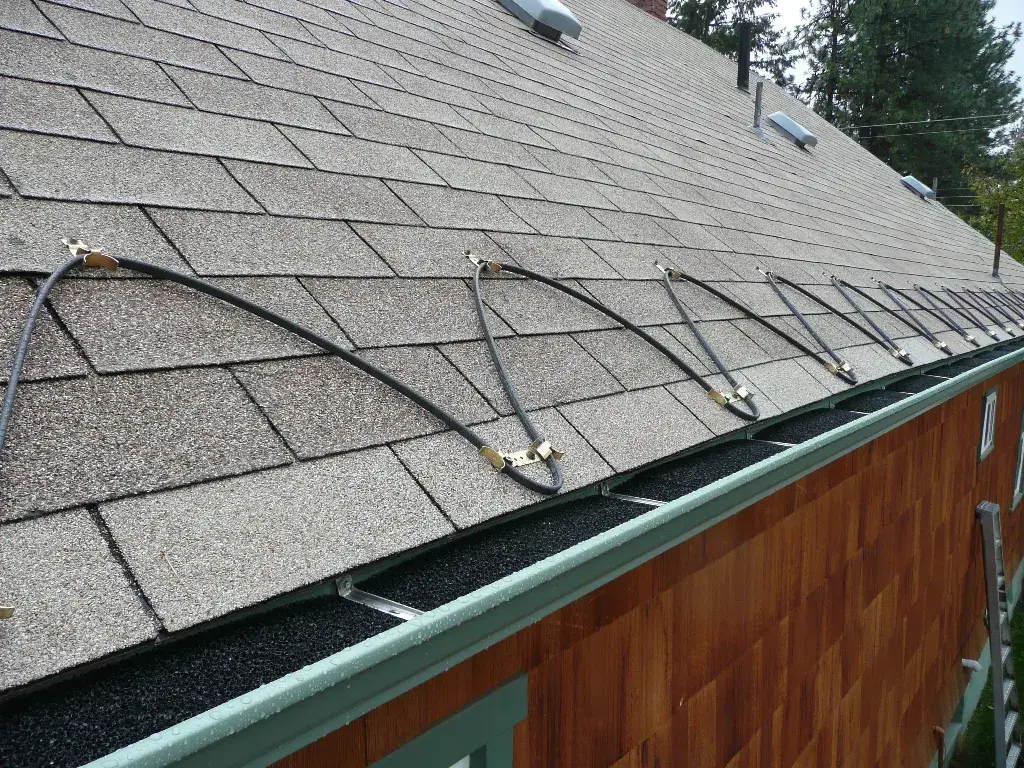
Heat cables can also be installed along the eaves to prevent ice dams from forming. These cables are designed to heat up and melt any snow that accumulates on the roof, allowing water to drain off the roof without refreezing at the eaves. However, this solution can be costly, and it may not be the most energy-efficient way to prevent ice dams.  

Use Ice Melt Products  

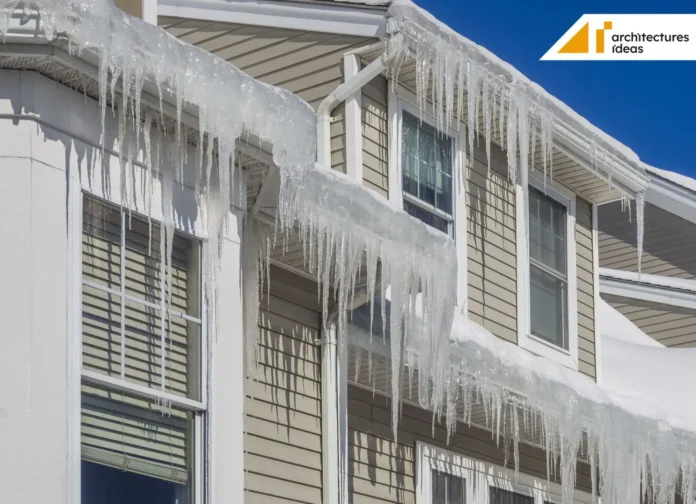
A house covered in ice and icicles on a sunny day

Ice melt products can also be used to prevent ice dams. These products are designed to melt the ice and snow on the roof, allowing water to drain off without refreezing the eaves. However, it’s essential to use these products carefully, as they can damage your roof and gutters if used excessively.

Trees Close to Your Home

A man cutting a tree with a chainsaw

If you have trees close to your home, consider trimming back their branches or removing them altogether if necessary; branches can act as pathways for water infiltration into your roof, resulting in ice dam formation or leaks inside the home itself.

If you have a problem with ice dams and don’t want to remove any trees on your property, try cleaning off any snow that accumulates on them during winter months so it doesn’t melt and trickle down into the gutters below. 

This is especially important if there’s already an existing layer of ice forming on top of these surfaces. The more layers there are underneath those ones (i.e., two inches versus one inch), the harder it will be for heat from within homes/buildings to be absorbed through windows/doors near ground-level levels. 

This is the place where temperatures fluctuate most frequently throughout seasons based upon weather conditions outside our control. This includes wind speed (which determines how much moisture gets blown around) versus humidity levels associated with humidity indexes calculated by meteorologists. 

It is those who work as part of teams dedicated solely to predicting future outcomes. This is based upon current trends observed worldwide today compared against historical patterns recorded over periods spanning centuries past.

Ice Dam Prevention

Icicles hang from the roof of a cabin

You can prevent ice dams from forming by clearing away snow early and not blocking gutters or venting areas with snow piled high. You can also use a roof rake to clear snow from the roof.

In conclusion, ice dams are a common problem that can be easily prevented by taking some simple steps. If you have any questions about how to prevent ice dams or think your home might be in danger of having them form on its roof, contact us today!

In case you missed it!

Stucco Repairs: How to Fix Cracks and Holes

0
Stucco Repairs

Although stucco is famous for its toughness, this doesn’t make the material immune to surface wear and tear. Not many can boast of having an impeccable exterior without putting in extra work to maintain the exterior stucco. Because of this, many homes have cracking problems.

Fixing cracks as soon as possible can help your stucco outside last as long as it should by preventing moisture from getting in and harming it. There are different types of wall cracks and different ways to address them, but knowing the size and pattern of the cracks can be used as a compass to determine how to seal any openings.

Essential Tools For Stucco Repairs

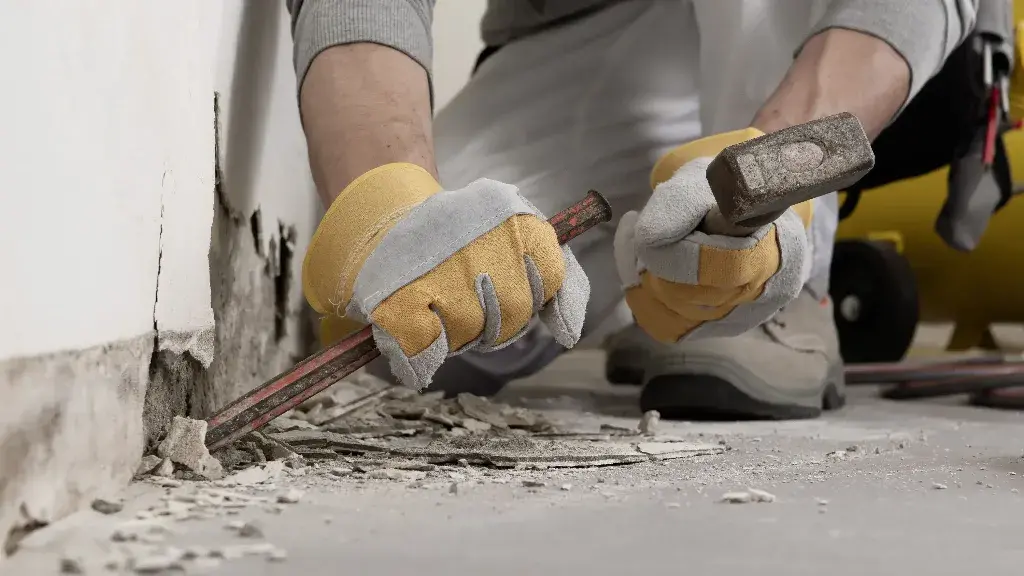
Stucco Repairs: A man working on a wall with a hammer

Regardless of the size of the holes and cracks, the materials needed to fix them are ideally the same. These are crack sealants like caulk, a caulking gun, house wrap, felt paper, water, rag, stiff brush, screwdriver, wire brush, chisel, knife, gloves, scratch awl, and hammer.

You might be able to complete the repair work if the stucco damage you’re dealing with is limited to a square-foot crack or hole. However, you’ll likely need the assistance of professionals for other repairs like poor stucco installations or reviving stucco affected by moisture.

Small Stucco Crack Repairs

Stucco Repairs : A person using a paint roller to paint a wall

According to Albuquerque stucco repair, don’t be alarmed if tiny hairline cracks in your stucco siding occur because they’re simple for homeowners to fix. Caulking and paint can effectively repair hairline cracks, which are between 1/16 and 1/8 of an inch wide. Getting hairline crack repairs done with professional stucco repairers is equally a smart choice.

For starters, you should begin the repairs by cleaning the crack zone. Use a stiff paint brush and gently scrub any dirt from the crack’s surrounding area. Fill and seal a crack no larger than 1/8 with acrylic exterior caulk. For cracks up to 1/4 inch wide, it’s advised to use sanded acrylic exterior caulk. Paint the stucco as necessary after allowing the caulk to dry.

Big Stucco Cracks And Small Hole Repairs

Stucco Repairs: A person using a paint roller to paint a wall

For more pronounced stucco crack repairs, one may need additional preparation work and use a different repair product to fix holes and larger cracks 1/4 and above. Bear in mind that having many large cracks could indicate a problem that maintenance work can’t repair.

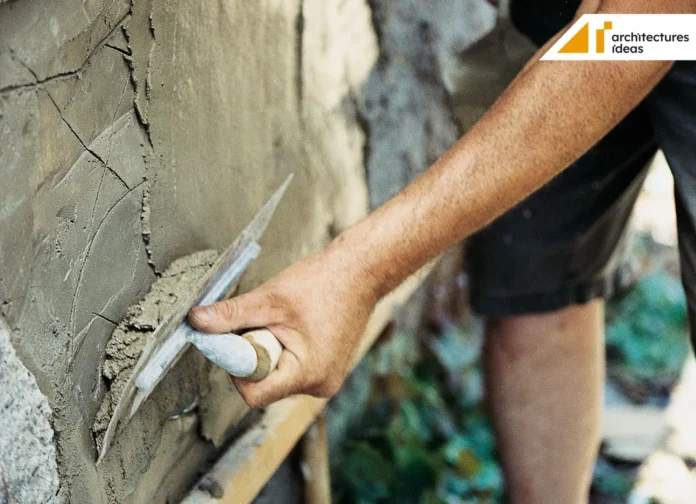
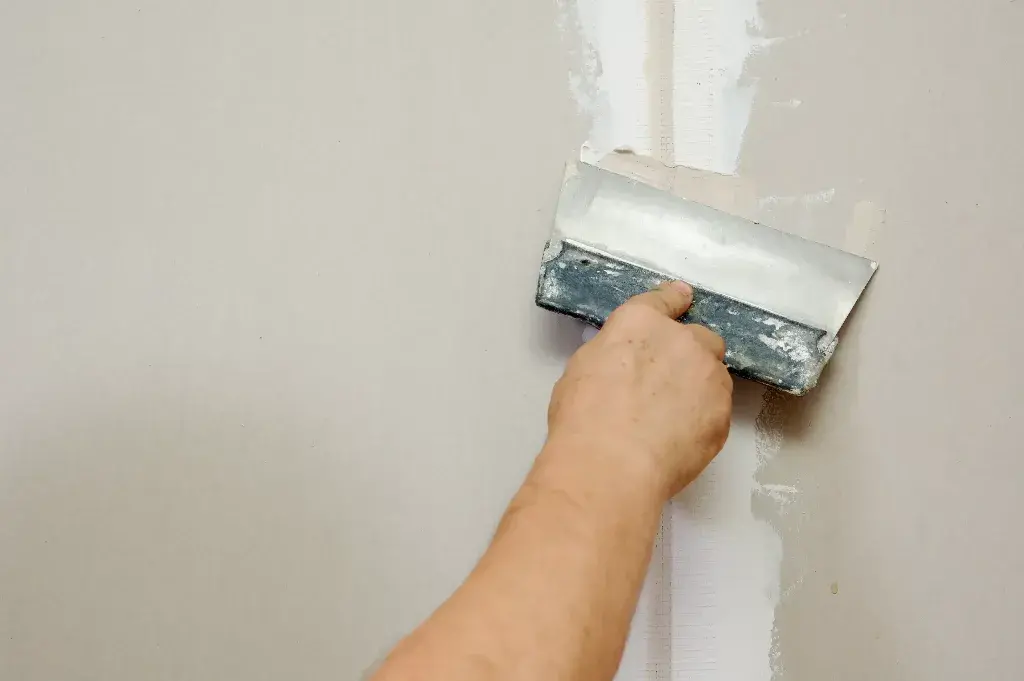
To start the repair process, use a knife or scratch awl to remove loose debris from the crack or hole. Then, fill the damaged area with a pre-mixed stucco-mending mixture using the same knife. To match the texture of the existing stucco, add texture to the patch. Once the repair substance has dried, use a wire brush to smooth it out.

Stucco Vine Removal

Stucco Vine Removal

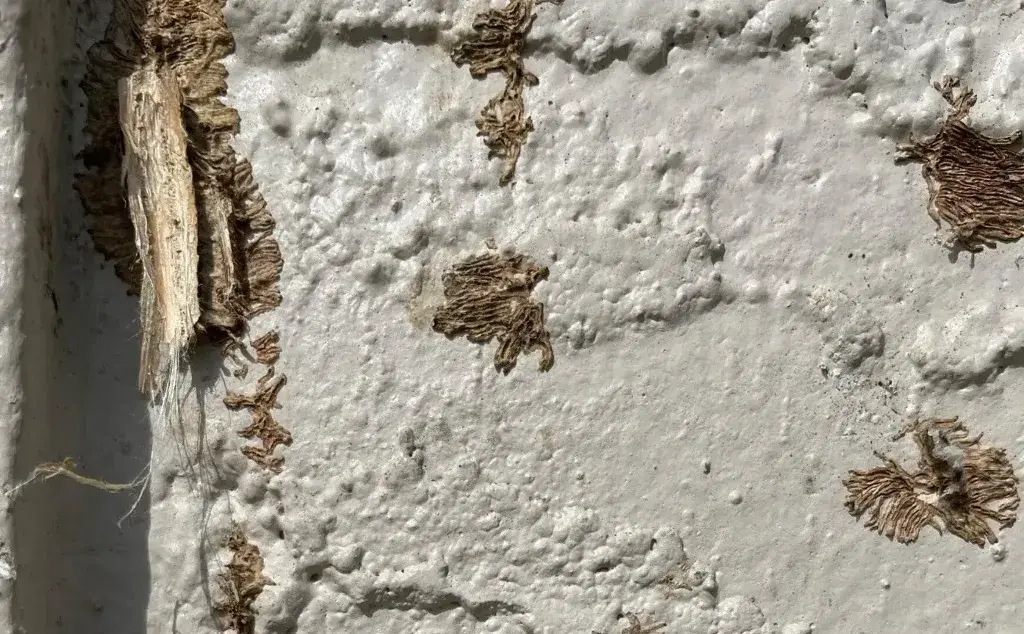
Before cleaning the vines, make sure they’re dead and sun-dried off. To do this, you must dry up the roots and prevent them from growing further by spraying them with soapy water or calcium hypochlorite, often known as pool shock. Then scrub the area with a stiff-bristle nylon brush and soapy water to eliminate the plant fragments without harming the stucco.

Damaged Stucco Repairs

Stucco Repair : A man in overalls painting a wall with a paint roller

As mentioned above, the more holes and cracks, the higher the chances of them being a problem ordinary routine maintenance can’t fix. Fortunately, some hacks can serve as temporary fixes.

  • To begin the process, start by removing loose stucco. Use a hammer or chisel to take off any broken stucco in the area that requires repair.
  • Next, remove the lath using tin snips, and carefully remove the felt paper or house wrap close to the damaged stucco.
  • Cut a piece of felt paper or house wrap to match the dimensions of the damaged area precisely. Attach it to the sheathing using a staple gun, and apply acrylic exterior caulk to seal it.
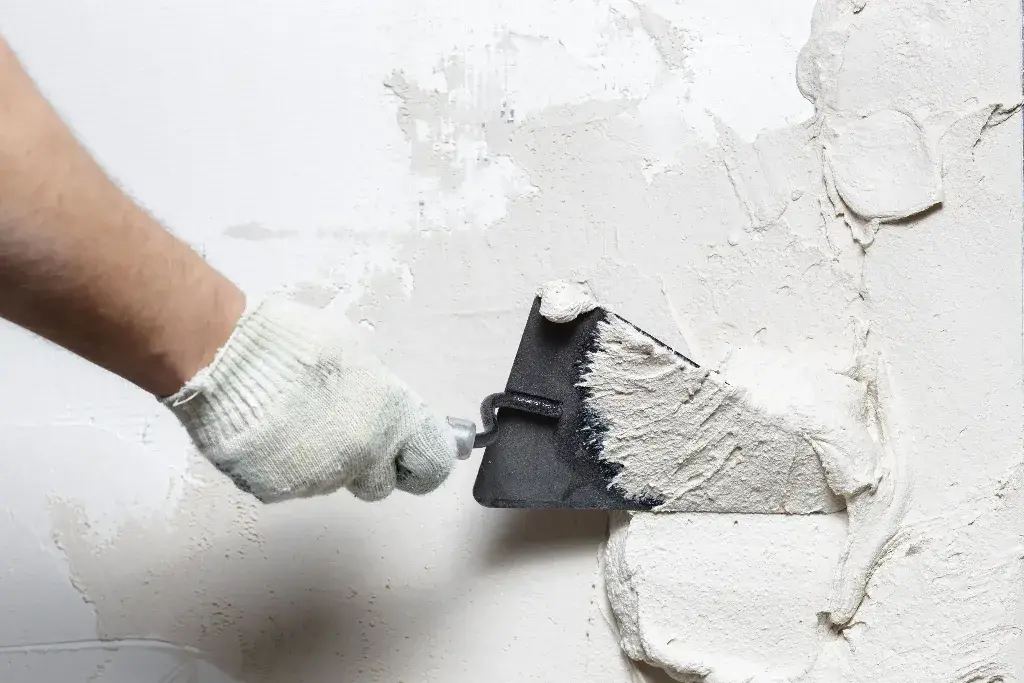
  • The next step is applying the Scratch coat, the first layer of stucco repair. You can directly apply a pre-mixed stucco repair mix with a trowel or a traditional mix that requires mixing in a plastic tray. Whichever you choose, make sure to select a mixture that dries fast.
  • After the first quote has dried, prepare the same surface for the second coat by etching the stucco material’s surface to aid in the adhesion of the subsequent coat.
  • Now apply the Brown coat, the second layer of the stucco. 
  • Depending on the weather, let the brown-scratch layer cure for 5-7 days. Too little time and moisture will result in problems with the finished stucco layer.
  • The final layer of stucco is known as the color coat, which you should apply to the repaired area. It is recommended to use a colored stucco mix that matches the current color of the surface. However, if the surface already has two layers of painted stucco, you can also use the same stucco mixture for the color coat.

Conclusion

Improperly prepared or inadequately applied stucco tends to crack or, worse, come loose in certain places. However, these recommendations ought to solve and prevent such issues.

Learn more:

Selling a Home with Estate Agents: 6 Tips to Know

0
Selling a Home with Estate Agents

The decision to sell your home has been made. You probably want to relocate to a larger home with more space and greater facilities, or simply because you want to explore the world. In either case, the moment has come to list your house for sale!

Selling a house can be intimidating if you’ve never done it before, much like many other things in life. 

Making sure the selling process goes as smoothly as possible when selling a home is the most important thing to pay attention to.

Selling a home with estate agents has many advantages.

You have the option of working with a representative from a major, prestigious real estate company or with a real estate agent that is not part of an agency.

There will be fewer individuals involved in closing the sale of your property if you opt to work with an agent rather than a larger company where more agents are working at any given time.

Benefit From Expert Services

Benefit From Expert Services

You must sign an exclusive contract if you want to entrust a real estate agent with selling your home.

A straightforward contract can set expectations for both parties, ensuring that it improves the sale’s effectiveness.

Real estate agents are experts in all phases of a real estate transaction and are available to give you advice at any moment. With that in mind, estate agents in Dagenham can provide sellers with valuable advice and assistance on preparing their homes for sale, marketing strategies to help maximize exposure, and even providing regular updates on progress with potential buyers. 

They handle the planning of the real estate announcement and the promotion of your property.

The Goals of the Buyer and Seller Are Different (The agent Will Protect Your Goals and Needs)

The Goals of the Buyer and Seller Are Different (The agent Will Protect Your Goals and Needs)

You should be aware that a real estate transaction involves two parties.

The buyer is the first party, and you are the second because you are the one selling your home.

Even when both sides want to reach a deal, their goals and interests are frequently at odds with one another and do not always align.

This may lead to difficult discussions that an experienced real estate agent can only win.

Real Estate Law: Complicated or Unclear Laws and Legal Requirements

For a layperson, the legal system and real estate law can be rather complicated.

Various laws may apply in different places and may have different criteria.

Professional real estate agents are routinely taught by qualified real estate attorneys to address these concerns and will be able to walk you through the procedure from beginning to end.

They Will Broadly Publicize Your Sales Listing

They Will Broadly Publicize Your Sales Listing

Buyers frequently review online real estate listings.

You might list your house for sale on a few websites, but this is a time-consuming and frequently expensive process.

Thanks to a real estate agent, your advertisement will appear on these websites as well as many more that are only accessible to professionals, as well as maybe on flyers handed out in your neighborhood or in publications the agent publishes.

Not to mention that the organization has access to a network-wide shared file system.

Nothing changes for you; you continue communicating with the same contact, but more potential buyers may view your advertisement because different agencies distribute it.

A Real Estate Agent Is Skilled at Negotiation

A Real Estate Agent Is Skilled at Negotiation

A real estate agent is skilled at negotiation and will be aware of the fair market value of your home, given the current market circumstances.

He is also aware of how long houses normally remain on the market before being purchased.

They can assist you in this process by adjusting their marketing tactics based on how long homes remain on the market before selling or disappearing entirely from their listings.

They Help You Maintain Contacts and Find Potential Customers

Selling a Home with Estate Agents

You need to know the best time to sell your house so it is preferable to use a real estate agent if you do not want to handle calls and visits from potential buyers.

By hiring a professional, you also avoid the frequently difficult negotiation stages.

The real estate agent will serve as a middleman and only present you with offers that meet your needs.

Keep reading:

How to Install an Electric Car Charger that Complements Your Home

0
Install an Electric Car Charger

Getting an electric vehicle (EV) charger for your home is not only a great way to keep your car powered up, but it can also add a touch of style and sophistication to the exterior of your home. But if you’re overwhelmed by the idea of setting one up yourself or don’t know where to start, fear not! In this blog post, we’ll give you some easy tips on how to install an electric car charger that complements your home perfectly, ensuring that charging time is as stylish as it is efficient. Let’s get started!

1. Choose an EV Charger That Will Blend in with Your Home’s Exterior

Choose an EV Charger That Will Blend in with Your Home's Exterior

When looking for an EV charger that will enhance the look of your home’s exterior, there are a few key features to consider. 

  1. Think about colors that match your home and how they’ll look with other elements like siding and trim. 
  2. You can start to compare design features, such as whether you prefer a modern or classic aesthetic. Consider the size of the charger; if it’s too large or small, it may detract from the overall look of your house. 

Whatever option you choose, make sure it adds personality without being too overwhelming in terms of its size or style so that it complements your home’s exterior instead of overwhelming it.

2. Consider the Location of the Charging Station and Make Sure It’s Easily Accessible

Consider the Location of the Charging Station and Make Sure It's Easily Accessible

When planning the installation of an EV charging station in carport, it is important to ensure that not only is it accessible for drivers in your area to find and use but also that it looks aesthetically pleasing. 

Consider if you would like the charger tucked away in a discreet location or expressed in a more prominent space. Pay close attention to the details of the design – think about the color scheme, materials used, size, etc., so that the structure works harmoniously with your home’s exterior. 

With thoughtful planning and design, your EV charger can be a stylish addition to your property while providing drivers nearby with an essential service.

3. Match the Charger to the Style of Your Home

Match the Charger to the Style of Your Home

Adding an electric vehicle (EV) charger to your home can not only save you a lot of money in the long run, but it will also complement the overall aesthetic of your house. EV chargers come in different colors, styles, and shapes to match almost any type of house. 

As an added bonus, many modern chargers are designed to conserve energy and have impressive control features such as automatic shutdown. So if you’re an EV driver looking to add a charger to your home stylishly, look no further! There is likely an option out there that suits your needs and accentuates the design of your residence.

4. Install the Charger Yourself or Hire a Professional to Do It for You

Deciding whether to install the EV charger yourself or hire a professional to do it can be a difficult choice. After all, an EV charger is something you want to be relying on for years, and making sure it’s done right is key. 

But it’s worth considering a professional installation job if you’re also looking for something that perfectly complements your home’s aesthetic and adds value to your property. They have the expertise and experience needed to ensure your EV charger looks great and stands the test of time. 

Plus, they can help you pick out the perfect design that truly complements your home — a luxury you don’t get when doing it yourself.

5. Safety Considerations to Keep in Mind

Safety Considerations to Keep in Mind

Installing an EV charger at home can make it easier to keep your electric vehicle charged. However, it’s essential to take the necessary safety precautions to ensure everything runs safely and smoothly. 

Before beginning any installation process, be sure that you have a basic understanding of electrical principles and safety measures. As well as having the necessary tools for the job, it’s also very important to be familiar with the current safety codes for installing electric vehicle charging stations- many towns and cities now require special permits or inspections. 

Additionally, you’ll want to make sure that any work is done by a certified professional to ensure both your safety and the longevity of your EV charger.

Concluding Thoughts

Now that you know how to install an electric car charger that compliments your home’s aesthetic, it’s time to get started on your project. With these tips in mind, you’ll be able to create a charging station that is both functional and stylish. Thanks for following along, and we hope this article was helpful. Good luck!

Keep reading:-

30+ Best Architectural Porch Railings Ideas and Designs

0
deck railing style

Do you consider architectural porch railings to be only functional components of your front porch? They are functional, given the possibility of you falling off the porch’s edge. But have you ever thought what if your deck railing styles do not complement your home’s overall facade aesthetic? Yes, railings are more than just functional elements! 

There are many different kinds of porch railings available in a variety of patterns, styles, sizes, and materials. You may simply select one based on the exterior of your property. We have curated a list of 30 architectural porch railings that will help you increase the curb appeal of your front porch. Get ready to chill in style with these appealing porch railing ideas.

30 Gorgeous Architectural Porch Ideas to Complement your House

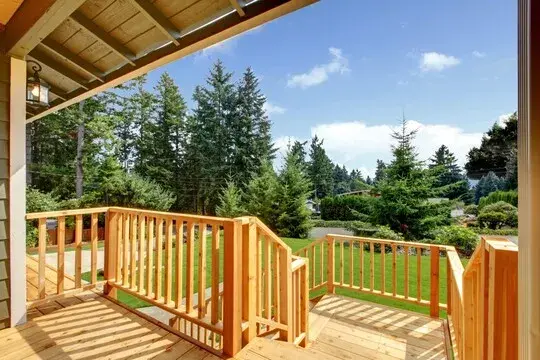
1. Modern Wood Porch Railing Design

Modern Wood Porch Railing Design

If you are fortunate enough to have your porch in today’s crowded urban world, you most likely live in a beautiful villa of your own. What architectural porch railings would complement your home more than the evergreen wooden porch railing?

You may experiment with wood to design the perfect railing for your porch, from sophisticated hardwood designs to plain wooden plank ones. What else? Wood railings are affordable and easy to build without the assistance of a professional.

2. Sawn Baluster Porch Railing Ideas

Sawn Baluster Porch Railing Ideas

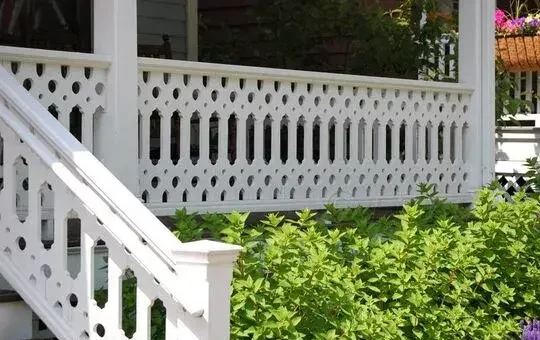
Do you want to give your house a heritage and colonial touch? You can’t go wrong with these Sawn Baluster ideas for your front porch. Fret-sawn balusters, which are also called sawn balusters, display a highly decorative pattern that is replicated.

The flat surface allows you to create elaborate patterns that will improve the appearance of your porch. You may also experiment with various color schemes, ranging from the traditional white Victorian design to rustic red screen porch railing ideas.

3. Chippendale-Style Railings

Chippendale-Style Railings

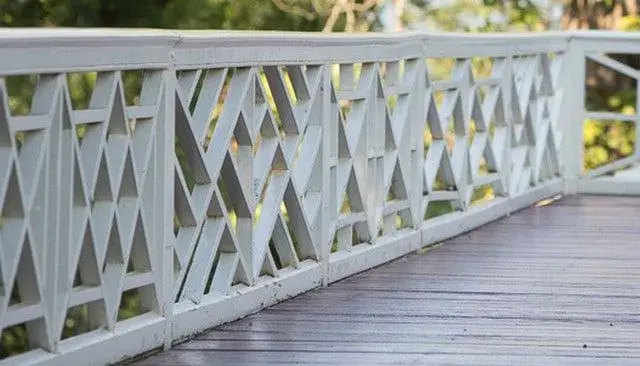
Are you into elaborate and rhythmic geometric patterns? Consider using these Chippendale-style railings. These railings are named after the famous furniture maker Thomas Chippendale and contain repetitive geometric motifs. Chippendale furniture was inspired by the Asian furniture style, which has repeating geometric line patterns within a rectangle. 

These interwoven shapes are essentially X-shaped fences with smaller lines filling in the gaps. Another advantage is that these architectural porch railings are extremely DIY friendly and require basic materials that you will find in your backyard.

4. Metal and Glass Railing for a Contemporary Aesthetic

Metal and Glass Railing for a Contemporary Aesthetic

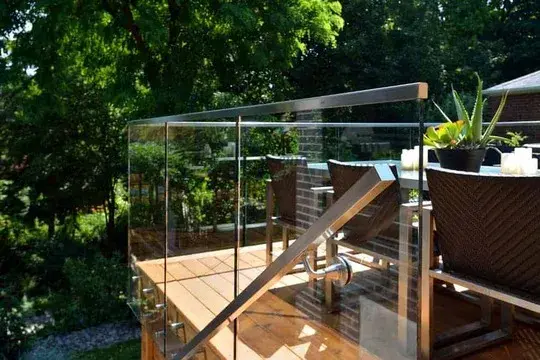
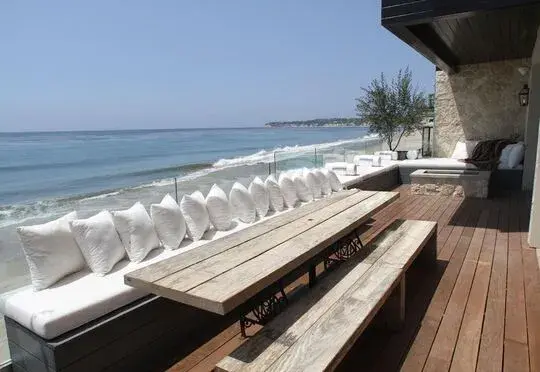
All the above architectural porch railings give a more cottage and vintage vibe. What if you live in a sleek modern villa or you want more than just the classic fencing options? Metal and glass railings ideas are your saviors for porch. 

Transparent or tempered glass panes are supported by these metal frames   You may also use colored or transparent glass to give character to the railings.

5. Horizontal Deck Porch Railing Ideas

Horizontal Deck Porch Railing Ideas

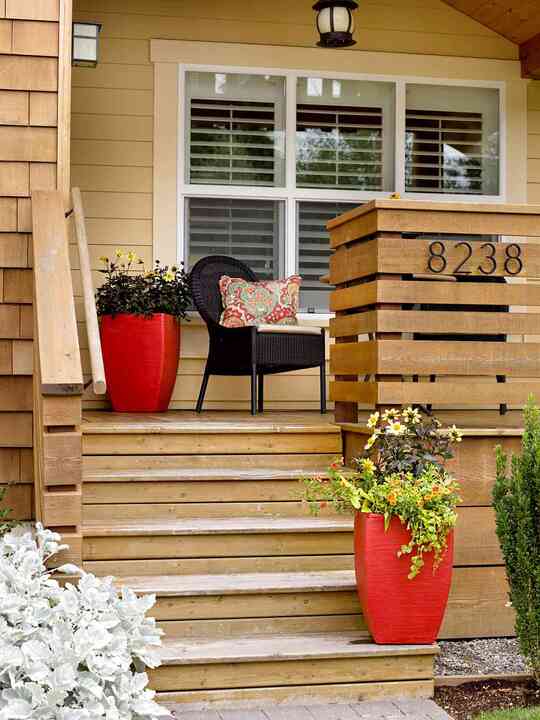
Why stick to the typical vertical railing pattern when you can experiment with other patterns? Horizontal architectural porch railings are a blessing in disguise for compact decks. We all know that horizontal lines make a space appear larger in length. 

Also, the deck-like pattern will give you privacy, as you sit and sip your coffee on the front porch. You can also add planter boxes with horizontal planks for additional utility.

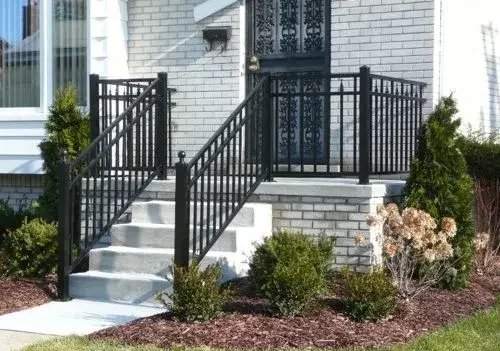
6. Minimalistic Aluminium Railings for Front Porch

Minimalistic Aluminium Railings for Front Porch

Do you want to enjoy uninterrupted views of your front yard without jeopardizing the safety of your verandah? Sleek aluminum bar railings are your best bet. These are functional, minimal, and easy to use. For example, you may adjust the handrail to your liking. It might be flat, spherical, or even tapered. You may also adjust the density of the vertical bars to achieve the amount of privacy you desire.

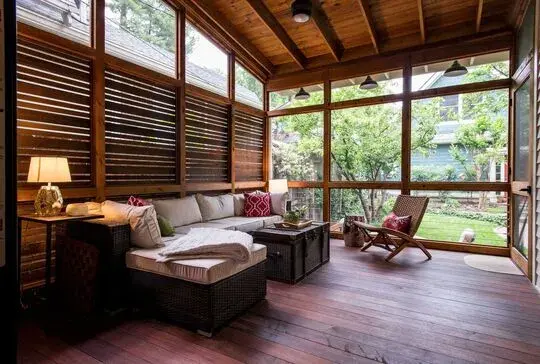
7. Traditional Wooden Screens

Traditional Wooden Screens

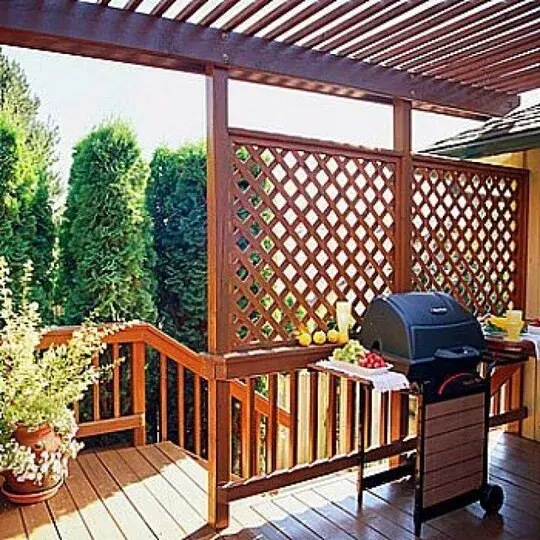
It’s time to abandon traditional wooden fence ideas. Wood is a versatile material that provides much more than a sequence of vertical planks. Consider full-length lattice screen porch railing ideas.

This is an excellent alternative for houses that have a nice deck or front porch but lack seclusion. Lattice screens have elaborate designs that allow gentle sunshine to pass through. You will also have access to a semi-private porch space for your tea gatherings.

8. Sleek Cable Architectural Porch Railings

Sleek Cable Architectural Porch Railings

Today most homebuyers seek a minimalistic aesthetic. The front porch railing design is no exception. If you want a subtle yet appealing railing alternative, consider these cable porch railing styles. With slender steel wires and minimum hardware, this has clean, straightforward lines.

For a sleek, futuristic design, pair steel posts, and hardware with black or dark-coloured wires. What else? You may also play with the density and thickness of the wires to get a trendy look.

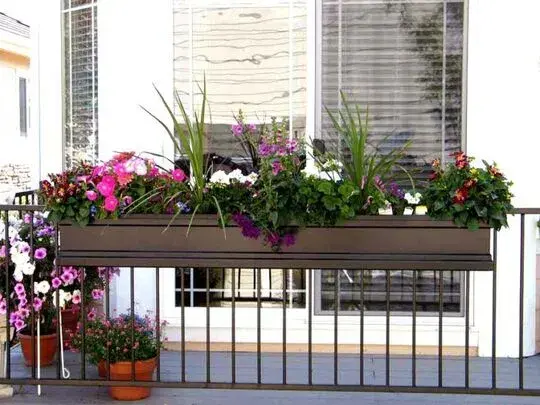
9. Classic Porch Railing Design with Flower Boxes

Classic Porch Railing Design with Flower Boxes

Your front porch is not supposed to look barren. Decorate with all kinds of flowers and vines to add a touch of nature. But for that, you need boxes to plant these blooms.

What if your railing design comes with planter boxes? Genius right? But the fact is that these are very common and easy to replicate. If you have a fence-style railing, you just have to nail some wooden planter boxes to the planks. 

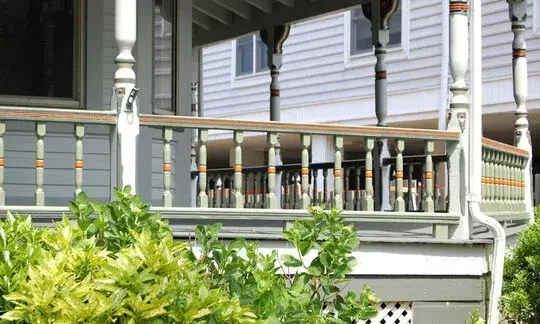
10. Elegant Turn Balusters

 Elegant Turn Balusters

Vertical railings are the most popular style of porch fence on the market. Most houses include pre-built vertical railings. Are these railings, however, too basic for you? With these turn balusters, you always add a bit of flare. 

At first sight, this style appears to be quite similar to the standard, vertical architectural porch railings. However, the little ornamentation adds something special to this alternative.

11. The X Factor

The X Factor

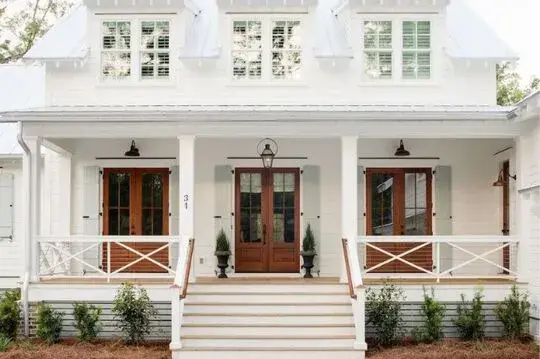
A criss-cross plank design adds character to a simple rectangular geometry. If you want a classic South American aesthetic, this is your go-to design. It’s even better if you have a plush lawn in front of your porch. 

These simple architectural porch railings create an inviting and laid-back appeal perfect for relaxing on Sunday mornings. You can also play with the colors. Paint it in classic white or add some flair with rustic red, cream, and even unusual colors like blue.

12. A Boho Porch

 A Boho Porch

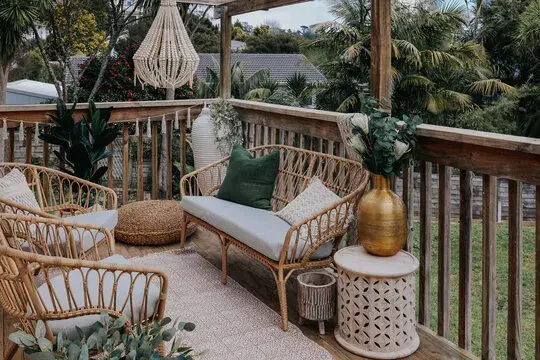
Why would your porch be an exception now that the Bohemian style has swept over the world? To get that relaxed look, combine wire railing with wooden frames. Combine your woven rustic furniture with the wooden frame. Attach fairy lights to the wires to create a stunning nighttime nook in front of your home. You may also try growing lush vines and wildflowers around the cables.

13. Nautical Porch Railing Ideas

Nautical Porch Railing Ideas

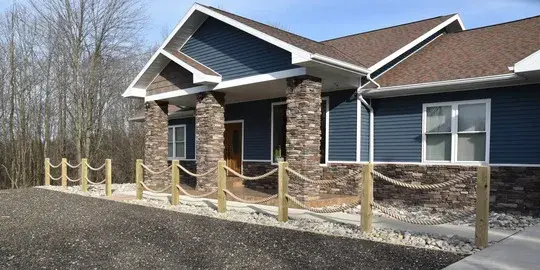
This is the age of experimentation! Your housefront should represent both your aesthetic values and your eccentricities. Every sailor’s fantasy décor is this nautical-themed fence.

You can easily replicate this design. All you need are some vertical wooden boards and some rope. Voila! You’ve got your jetty-style deck! Maintain extreme caution while standing on the ledge.

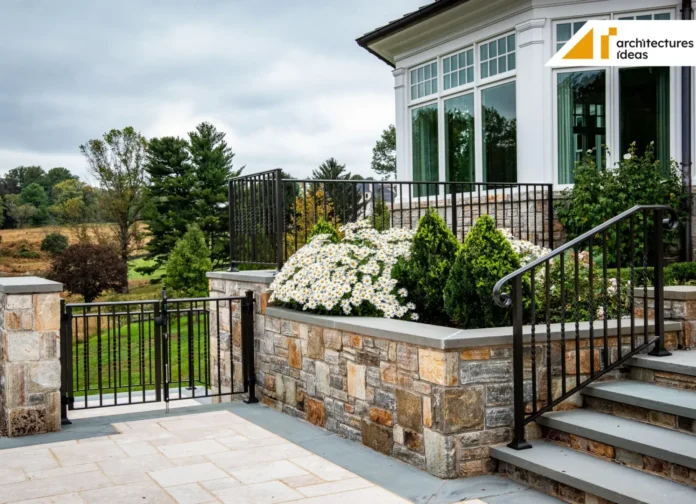
14. Stately Stone Architectural Porch Railings

Stately Stone Architectural Porch Railings

Want a classic and elegant appeal for your front porch? You can’t go wrong with stone Porch railing styles. To get a rustic and earthy aesthetic, utilize natural stone like limestone or granite. Stone balusters can be used in conjunction with wooden railings.

The supports and balusters of a wooden handrail can be made out of flat stone slabs. When selecting a stone porch railing design, keep in mind the style and architecture of your home to guarantee a cohesive effect.

15. Solid Porch Railing with Seatings

Solid Porch Railing with Seatings

Solid architectural porch railings may seem dull, but they provide various advantages such as increased privacy, easy maintenance, and the ability to utilize the top surface for plant placement.

Additionally, from a design standpoint, niches can be carved into the railing or wall for storage, and seating extensions can be added to larger porches, which can be adorned with vibrant pillows and plants to create an ideal summer retreat.

16. Organic Stucco Porch Railing Ideas

Organic Stucco Porch Railing Ideas

Stucco is a flexible material that is ideal for designing organic architectural porch railings. Porch railings made of stucco can be curled into elaborate patterns or contoured to meet the porch’s curves. They can also be painted to match or contrast with the external color of the house. 

You may also play with decorative features, such as tiles or mosaics, or built-in lighting fixtures to take the porch design to the next level.

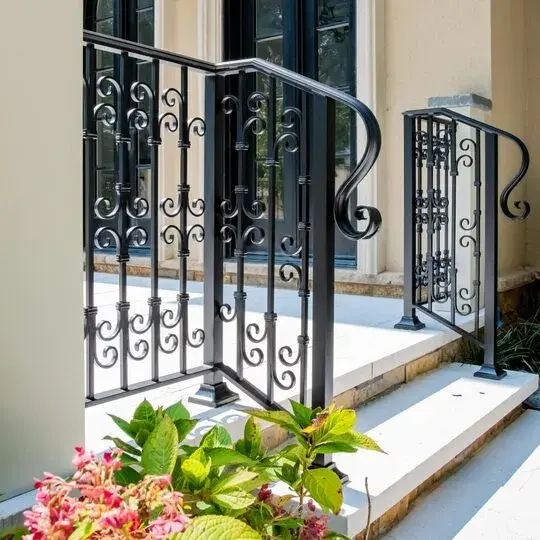
17. Royal Wrought-iron Porch Railings

Royal Wrought-iron Porch Railings

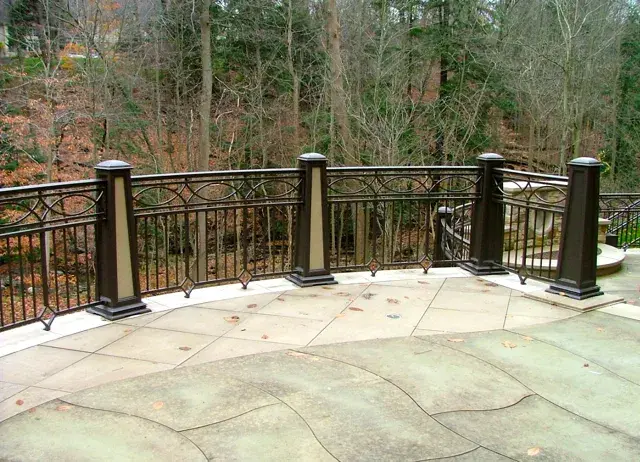
Do you want your porch to imbibe Victorian elegance? Intricately designed wrought-iron railings are a timeless classic that can bring grandeur and refinement to any porch. These handmade railings may be built to fit any style, from Victorian to contemporary. 

Scrollwork, fractal patterns, and floral patterns are examples of exquisite detailing. The material is long-lasting and resistant to the environment, making it suitable for outdoor use.

18. Chic Industrial Pipe Railings

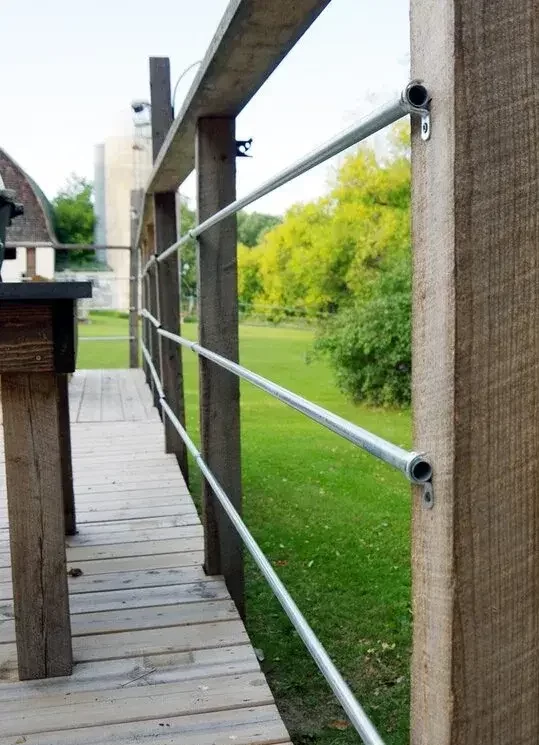
Chic Industrial Pipe Railings

Industrial architectural porch railings provide a touch of modern edginess to the front of your home. Industrial-style pipe railings’ clean lines and straightforward design may fit a wide range of housing designs, from the urban penthouse to suburban townhouses.

These railings may be coupled with other industrial components like exposed brick or concrete and can be given several finishes, such as polished or matte.

19. 60’s Flair with Mid-century Modern Railings

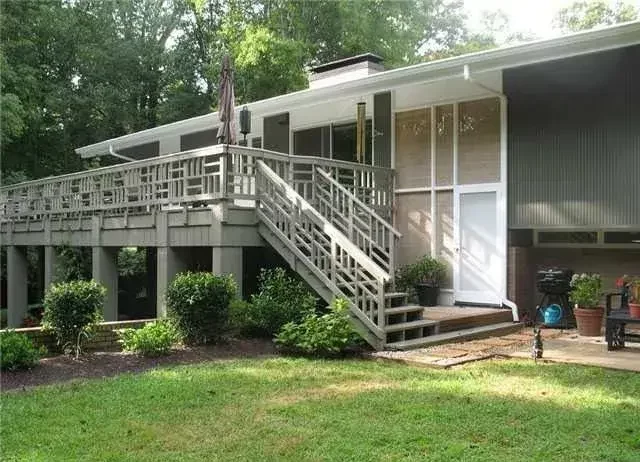
60’s Flair with Mid-century Modern Railings

Give your porch the perfect retro flair with mid-century modern porch railings. These railings include abstract or geometric designs prominent in the mid-20th century, and they may offer a nostalgic touch to any residence. 

The varied forms can provide visual appeal and can be painted to complement or contrast with the external color of the building. Furthermore, these railings may be used with other mid-century modern features, such as quirky furniture or eye-catching wall art, to create a coherent retro-chic appearance.

20. Art Deco Architectural Porch Railings

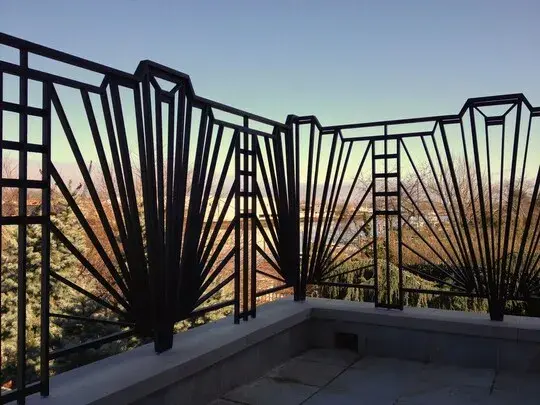
Art Deco Architectural Porch Railings

Evoke modern art with these stunning Art Deco inspired architectural porch railings. The style was all about modern art forms infused with luxe elements. These railings can be made from various materials, including metal, wood, and glass. The metal version is often paired with polished brass or chrome finishes to enhance the glamour factor. You may also carve niches or pierce holes in solid walls in the Art Deco style.    

21. Pop of Colours with Mosaic Tiles

Pop of Colours with Mosaic Tiles

There cannot be a better way to add a splash of color to your porch decor. The tiles can be composed of a variety of materials, such as ceramics, glass, or natural stones, and can be personalized to complement your home’s color scheme. Induce a Moroccan or Mediterranean flair to your architectural porch railings with multiple tile designs. You may also create graphic art with this style. Couple it with plants and statement furnishings to create a relaxing front porch design.

22. Reduce-Reuse-Recycle

Reduce-Reuse-Recycle

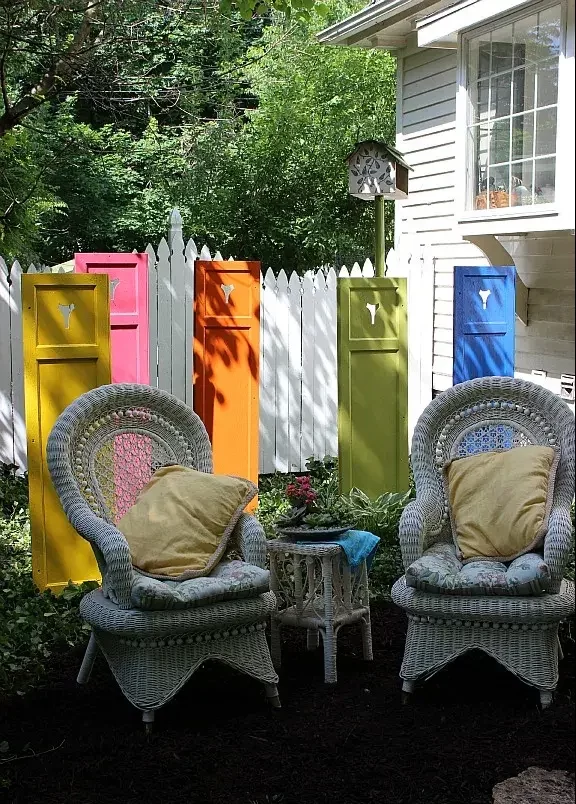
Do you save antique doors and shutters in your basement? If yes. They are the ideal materials for giving your front porch a vintage makeover. You may paint them in colors that compliment your facade.

The best part is that these shutter architectural porch railings allow for a great deal of creativity. Experiment with heights, accessibility, and typography. You may, for example, use openable shutters to manage your privacy level, or louvered shutters to evoke that old-world charm.

23. Modern Intricacies with Laser-Cut Metallic Railings

Modern Intricacies with Laser-Cut Metallic Railings

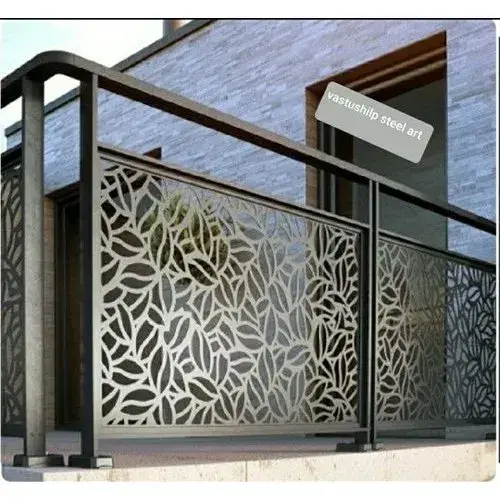
So you want elaborately carved designs, but it could be too expensive to hire an artisan to craft your design on it. However, modern technology has a solution for that as well! These architectural porch railings are laser-cut with accuracy, producing complex and sophisticated patterns ranging from geometric forms to organic themes. The metal structure assures longevity, and it may be completed with several coatings, such as powder-coating, for further protection.

24. Tropical Trellis Style Porch Railing

Tropical Trellis Style Porch Railing

We have been talking about mostly classic porch railing styles or contemporary ones in this blog. What if you want your porch to imbibe a tropical aesthetic? A trellis-style porch railing with climbing vines is a charming and practical way to add a whimsical touch to your house.

To get this effect, build a trellis-style wooden porch railing with vertical pillars and horizontal slats that allow climbing vines to weave in and out.

25. Scrollwork that Screams Attention

Scrollwork that Screams Attention

Source: compassironworks.com

Are you inspired by the intricate scrollworks of Victorian homes? You can add this flair in your porch railing too! These architectural porch railings are frequently made of wrought iron or other metals and include intricate patterns with precise scrollwork and bends. The elaborate design features give the railing a timeless and classic appeal that will amaze visitors and passersby.

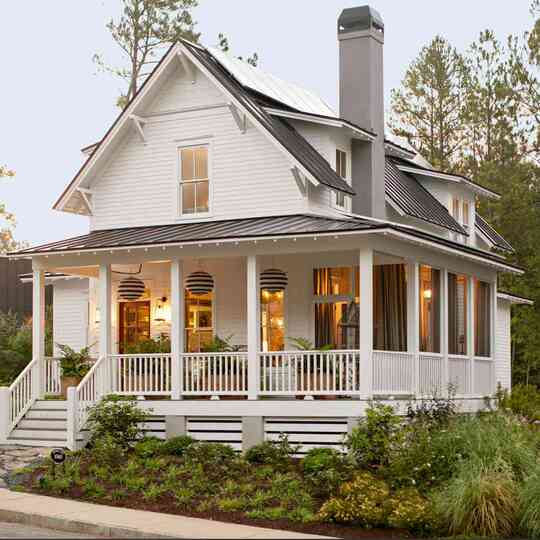
26. Cozy Cottage Style Porch Railing

Cozy Cottage Style Porch Railing

These architectural porch railings exude a fairy-tale like vibe. Also, they are extremely DIY-friendly and give an inviting touch to your house front. This style of porch railing is often made of basic and natural materials like wood, stone, or wrought iron.

The most popular, however, are those white flat wooden vertical railings. There are other types to select from, such as a conventional wooden railing with lattice or spindle embellishments.

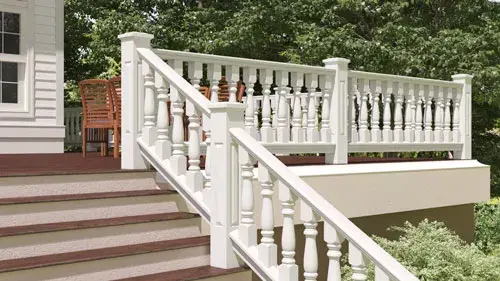
27. Classic White Victorian Railings

Classic White Victorian Railings

This is the best way to give your house an old-world charm with elegance. These architectural porch railings are often made of white or light-colored wood and contain delicate details like turned spindles, ornate brackets, and carved finials. Furthermore, white balusters may make your porch appear brighter and larger, while also providing a classic and fashionable design that will never go out of style.

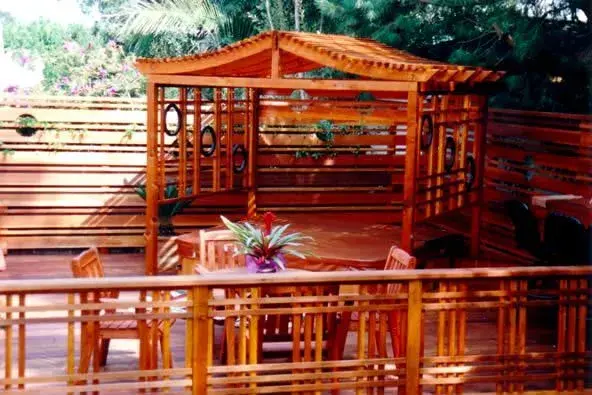
28. Asian-Inspired Porch Railing

Asian-Inspired Porch Railing

Do you want your porch to imbibe a zen ambiance? Try incorporating Asian elements in your design like bamboo accents or rustic wooden designs. Bamboo accents to the railing can be incorporated in a variety of ways, such as employing bamboo poles as vertical pillars or inserting bamboo lattices or slats into the design. The railing can be built of wood, metal, or a mix of the two, and can include exquisite patterns and embellishments influenced by Asian culture.

29. Timeless Brick Railings

Timeless Brick Railings

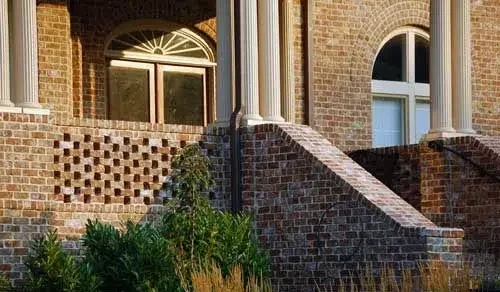
In the list of architectural porch railings, we can’t leave out the classic old brick half-wall. The material is incredibly adaptable and allows for a variety of experiments. A basic pattern of straight, piled bricks may be used to create a classic brick porch railing.

You may create a pattern of different colored or textured bricks for a more beautiful effect. Another unusual approach is to use various masonry techniques and bonds, such as a perforated brick wall.

30. Seamless Slat Railing

Seamless Slat Railing

We will end the list with the minimal yet versatile slat architectural porch designs. You may also alter the distance between the slats to suit your preferences and requirements. The slats may be placed closer together for more privacy and protection and further apart for a more open appearance. For extra visual appeal, another design option is to add a decorative pattern or design to the slats.

Did you Find the Porch Railing that Matches Your House decor?

Architectural porch railings are an important feature of any outdoor decor. When it comes to settling on the final design, there are no hard and fast guidelines. However, it must complement the other elements of the porch or it would feel out of place. So make sure you choose the right design that is aesthetically appealing and also functional.

FAQs

1. What Materials Can Be Used for Architectural Porch Railings?

A wide range of materials can be used for porch railing designs, including wood, metal, vinyl, composite, glass, and even natural materials such as bamboo or rope.

2. How Can I Pick the Best Porch Railing Design for My House?

Consider your home’s decor and select a porch railing design that matches it. You should also consider the degree of upkeep necessary for the material you select, as well as any applicable local construction laws or restrictions.

3. Can I Install Architectural Porch Railings Myself?

While some porch railing designs can be installed by homeowners, others may require professional installation. It’s important to follow all safety guidelines and instructions for your specific railing design and to have any necessary tools and equipment on hand.

4. Can I Customize My Porch Railing Design?

Yes, many porch railing designs can be customized to match your style and preferences. You can add decorative elements such as finials or post caps, and choose from different colors and finishes to create a unique look for your home.

More from The Architecturesideas